UAE plant guide
What outdoor plants need the least water and care in the UAE?
Low maintenance in the UAE means one thing above all: how long the plant survives between waterings in July. A plant that needs daily water is a daily commitment for four months of the year, and it is the reason most villa and balcony planting quietly fails during the summer holidays.
The list below is ordered by the summer watering interval recorded in our UAE Plant Index, not by general reputation. Everything here also shares one requirement that catches people out: sharp drainage. These are dry-climate plants, and in a compacted villa bed that holds irrigation water they die of root rot, not thirst.
| Plant | Water (in AC) | Light | Pet safe | Difficulty | Mature height | Price |
|---|---|---|---|---|---|---|
| Euphorbia Cactus ColumnEuphorbia trigona | Every 14-21 days | Full sun | No | Very easy | 60-180 cm | AED 149 |
| Yucca Rostrata — 120cmYucca rostrata | Every 10-14 days | Full sun | Partly | Very easy | 100-200 cm | AED 649 |
| Agave (Blue Attenuata)Agave attenuata | Every 21-30 days | Full sun | No | Very easy | 60-120 cm | AED 79 |
| Desert Rose (Adenium)Adenium obesum | Every 14-21 days | Full sun | No | Very easy | 40-80 cm | AED 119 |
| Elephant Bush (Portulacaria afra)Portulacaria afra | Every 14-21 days | Bright, indirect | Yes | Very easy | 100-150 cm | AED 65 |
| Sea Purslane (Sesuvium) Tray — 6 PlantsSesuvium portulacastrum | Every 7-10 days | Full sun | Yes | Very easy | 10-20 cm | AED 55 |
| Railroad Vine (Ipomoea) — 3 PlantsIpomoea pes-caprae | Every 5-7 days | Full sun | Partly | Very easy | 20-40 cm | AED 79 |
| Ghaf Tree — UAE National TreeProsopis cineraria | Every 10-14 days | Full sun | Yes | Very easy | 150-300 cm | AED 449 |
| Sidr Tree (Ziziphus)Ziziphus spina-christi | Every 10-14 days | Full sun | Yes | Very easy | 150-300 cm | AED 429 |
The picks, in order
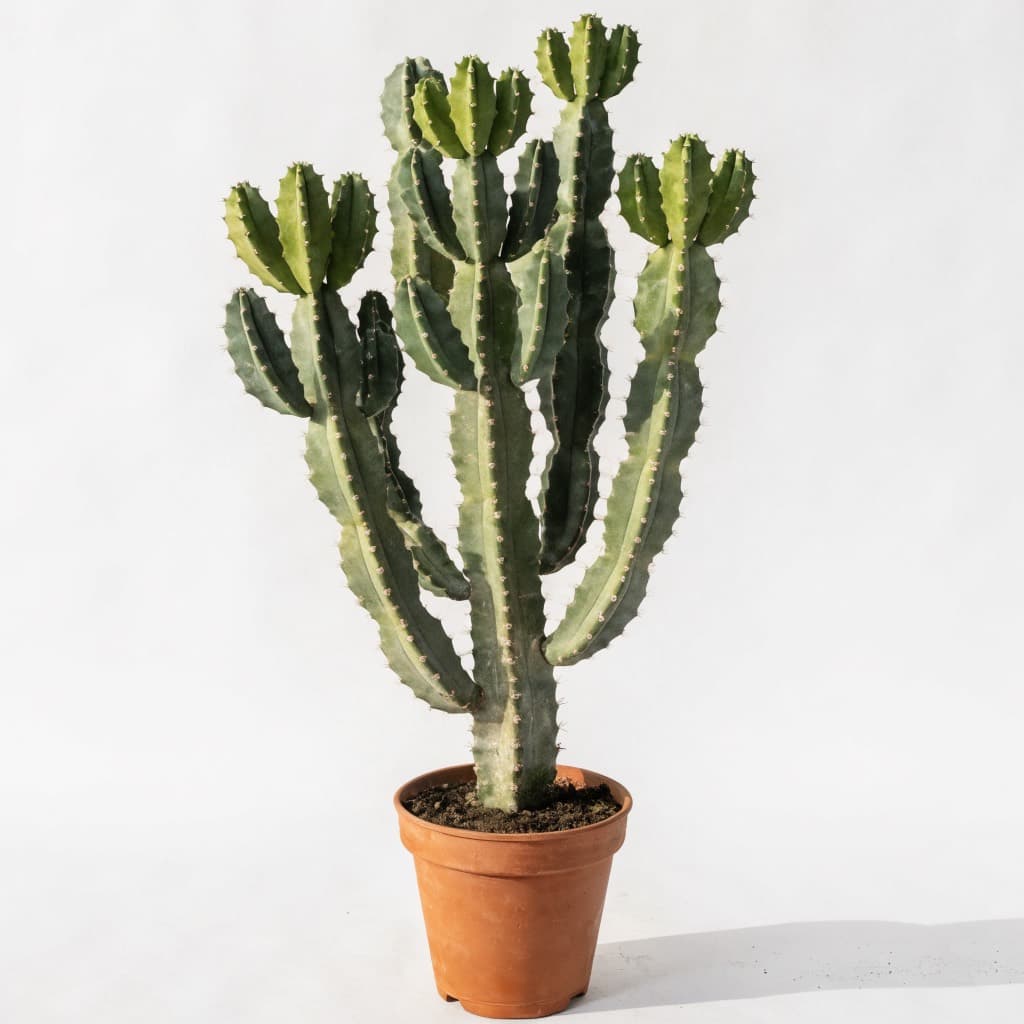
1.Euphorbia Cactus Column
Euphorbia trigona · AED 149
The lowest-input plant we sell — 7 to 10 days between summer waterings and nothing else asked of it. Not a true cactus: the white latex is caustic and causes chemical burns and eye injury, so site it away from paths and children.
Safety: Caustic white latex — it causes chemical burns on skin and serious injury in the eye. Wear gloves and eye protection when cutting, and keep it away from pets and children.
Not a true cactus, and the difference matters: the milky sap is caustic, unlike anything in the cactus family. Thrives on neglect in full Gulf sun, which is exactly why it ends up somewhere careless.
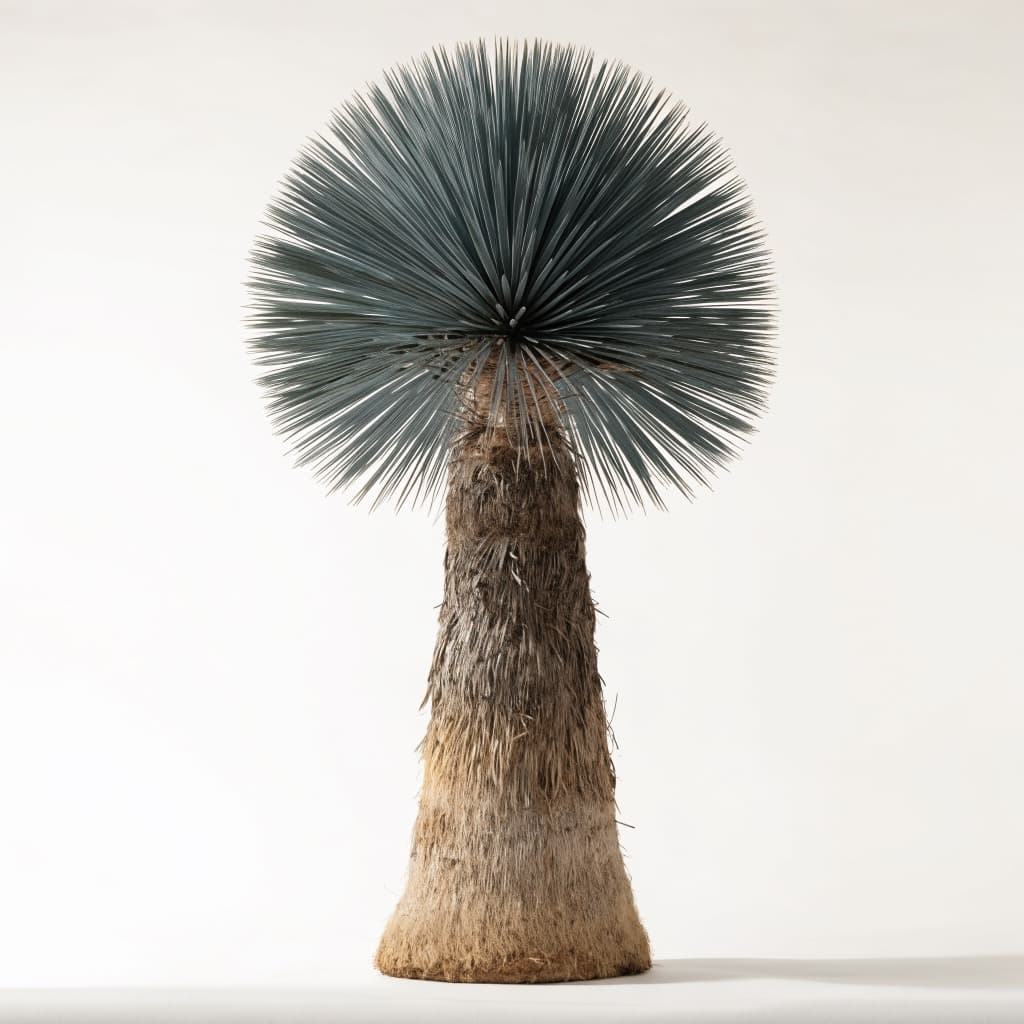
2.Yucca Rostrata — 120cm
Yucca rostrata · AED 649
Blue-silver architecture on a 5 to 8 day summer interval. Overwatering is the single realistic way to kill it here. Leaf tips are sharp enough to matter at child height.
Safety: Saponins cause vomiting if chewed, and the leaf tips are genuinely sharp — the puncture risk to a child's eye is the one to plan around.
Blue-silver architecture that needs almost nothing: full sun, sharp drainage, and water only when the pot is bone dry. Overwatering is the single way people kill it here.
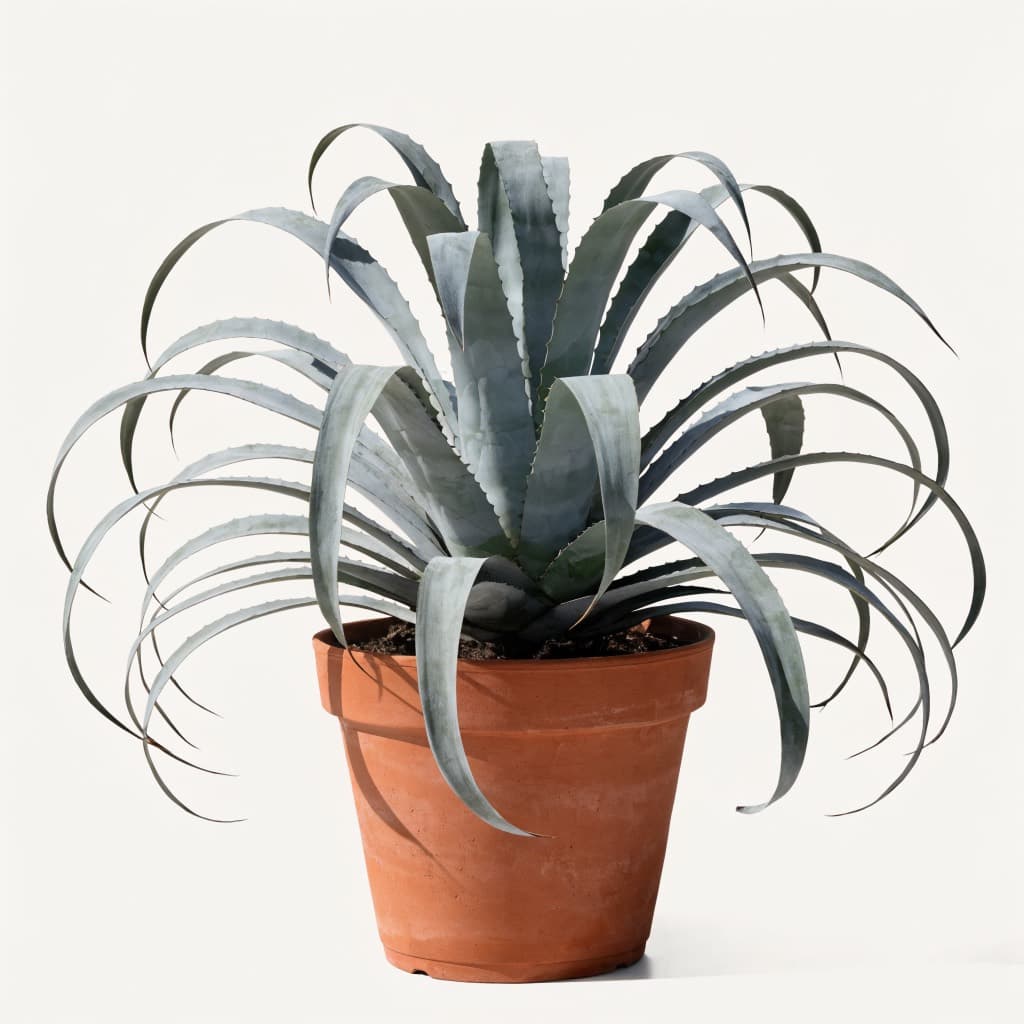
3.Agave (Blue Attenuata)
Agave attenuata · AED 79
A sculptural anchor that asks for full sun, sharp drainage and almost nothing else. Plan the position once — mature spines make it a plant you do not want to move past regularly.
Safety: Saponins in the sap, plus rigid terminal spines that can injure.
Effectively irrigation-free once rooted. Keep the spine tips away from walkways — on a young agave they are at eye level for a child.
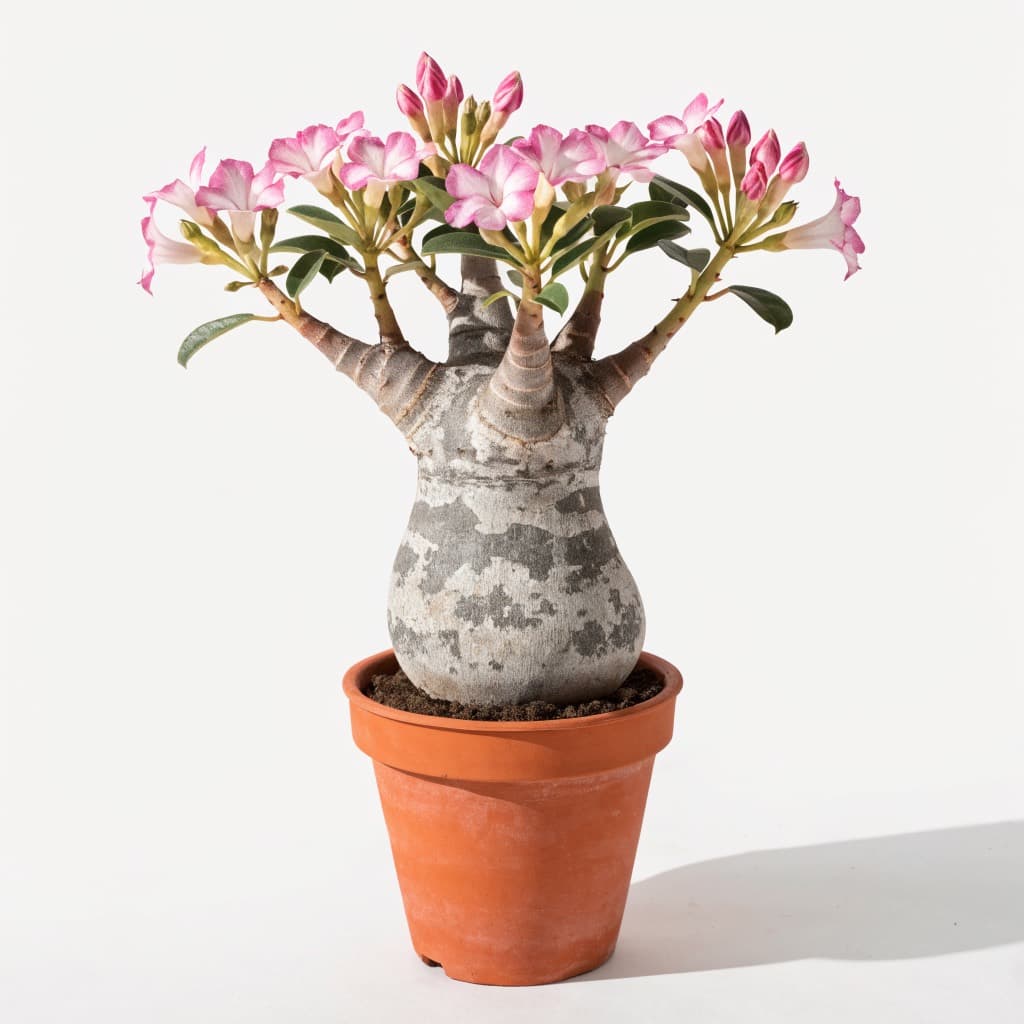
4.Desert Rose (Adenium)
Adenium obesum · AED 119
Flowers on a 5 to 7 day summer interval, which no other flowering plant on this site matches. Cardiac glycosides throughout make it genuinely dangerous to pets and children.
Safety: Cardiac glycosides throughout the plant — genuinely dangerous to cats, dogs and children if eaten. Keep out of reach.
Native to the Arabian peninsula's climate and completely at home in UAE heat — the caudex stores water, so it is the lowest-maintenance flowering plant on a sunny balcony.
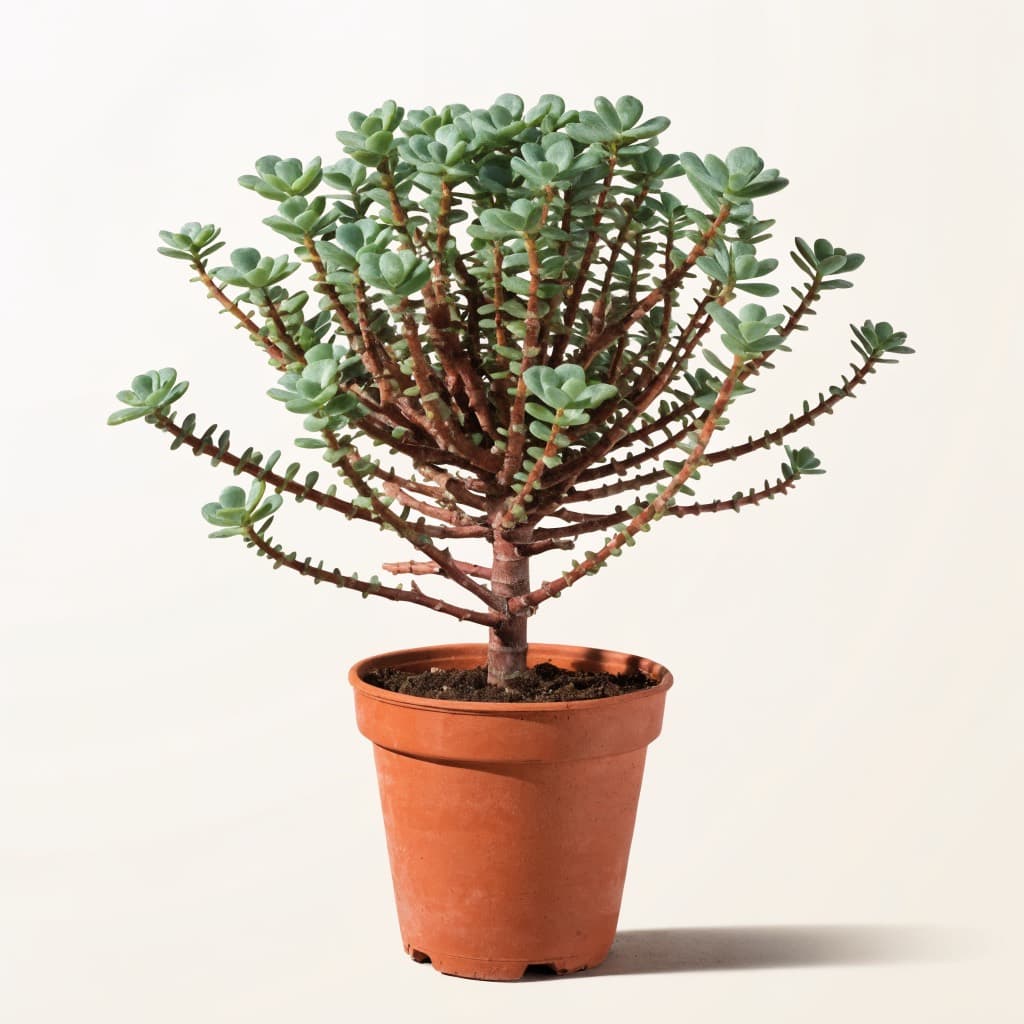
5.Elephant Bush (Portulacaria afra)
Portulacaria afra · AED 65
Pet-safe, which is rare in this group, and it stores water in thick tiny leaves. Happier with some afternoon shade than in unbroken western sun.
Rare combination here: a shrub-sized succulent that is genuinely non-toxic to cats and dogs, tolerates AC air, and clips into shape like a hedge plant.
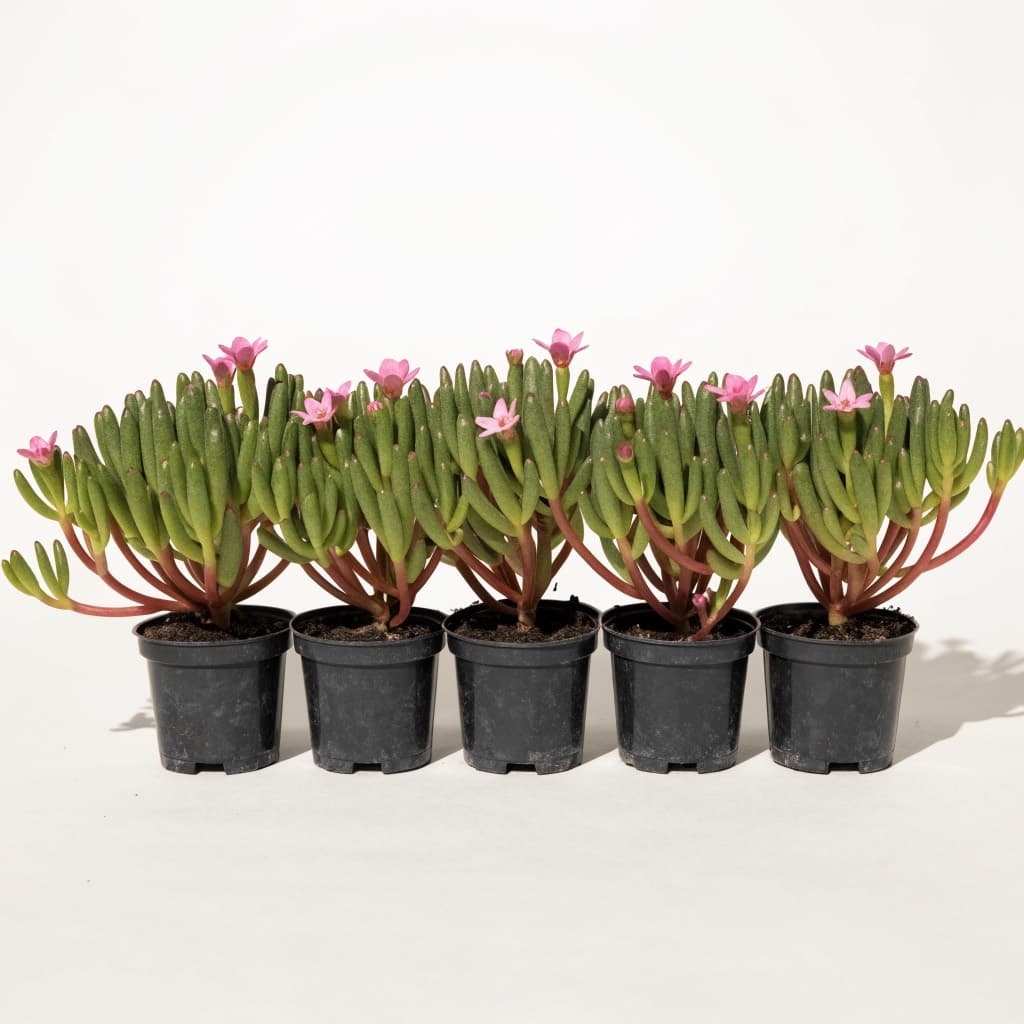
6.Sea Purslane (Sesuvium) Tray — 6 Plants
Sesuvium portulacastrum · AED 55
The ground cover the UAE uses on coastal verges because salt, sun and drought do not touch it. Spreads to fill a bed for a fraction of what shrubs cost.
Grows natively on UAE beaches in salt and sand — the ground cover for a coastal plot or a bed irrigated with brackish TSE water.
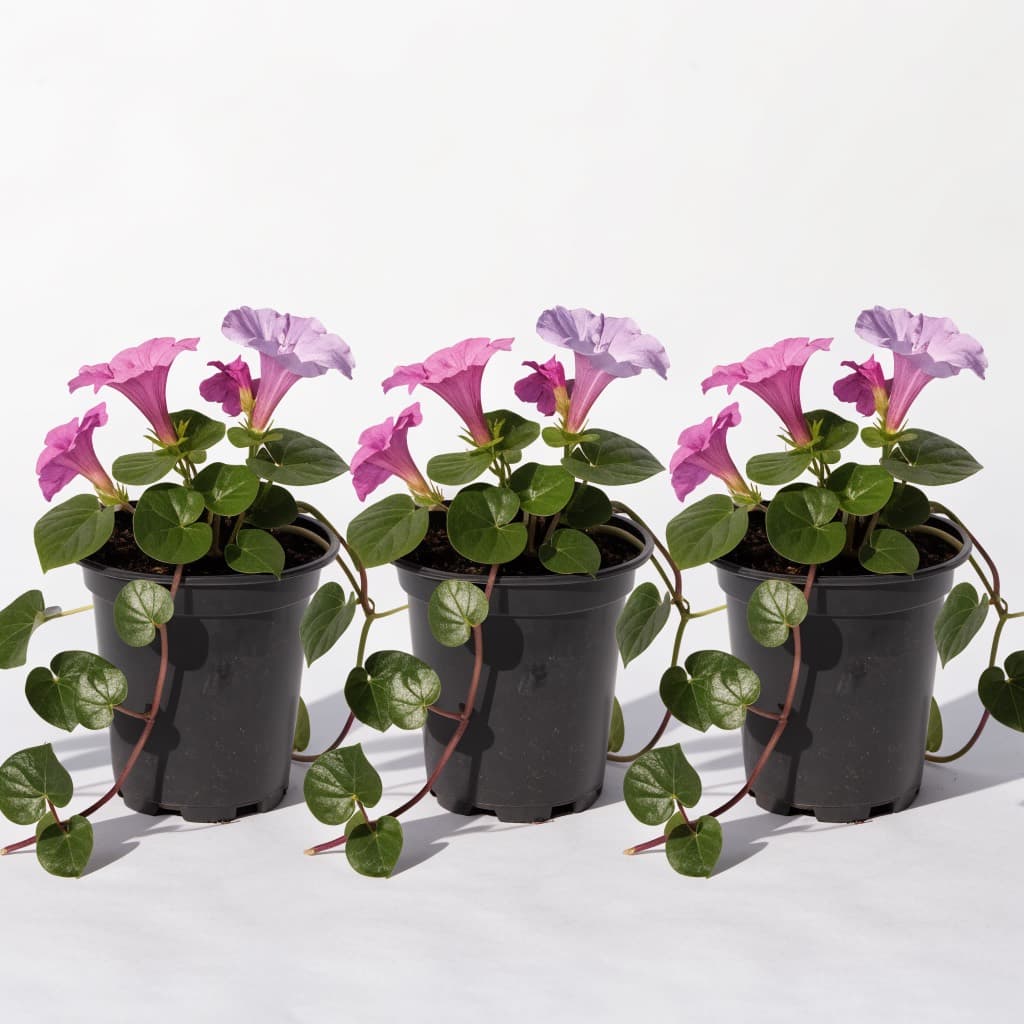
7.Railroad Vine (Ipomoea) — 3 Plants
Ipomoea pes-caprae · AED 79
A native coastal creeper that binds sand and takes salt spray directly. Useful for a hot exposed strip where nothing else establishes.
Safety: Seeds of Ipomoea species are toxic if eaten in quantity.
Runs metres in a season and holds loose sand in place — deliberately vigorous, so keep it off anything you do not want covered.
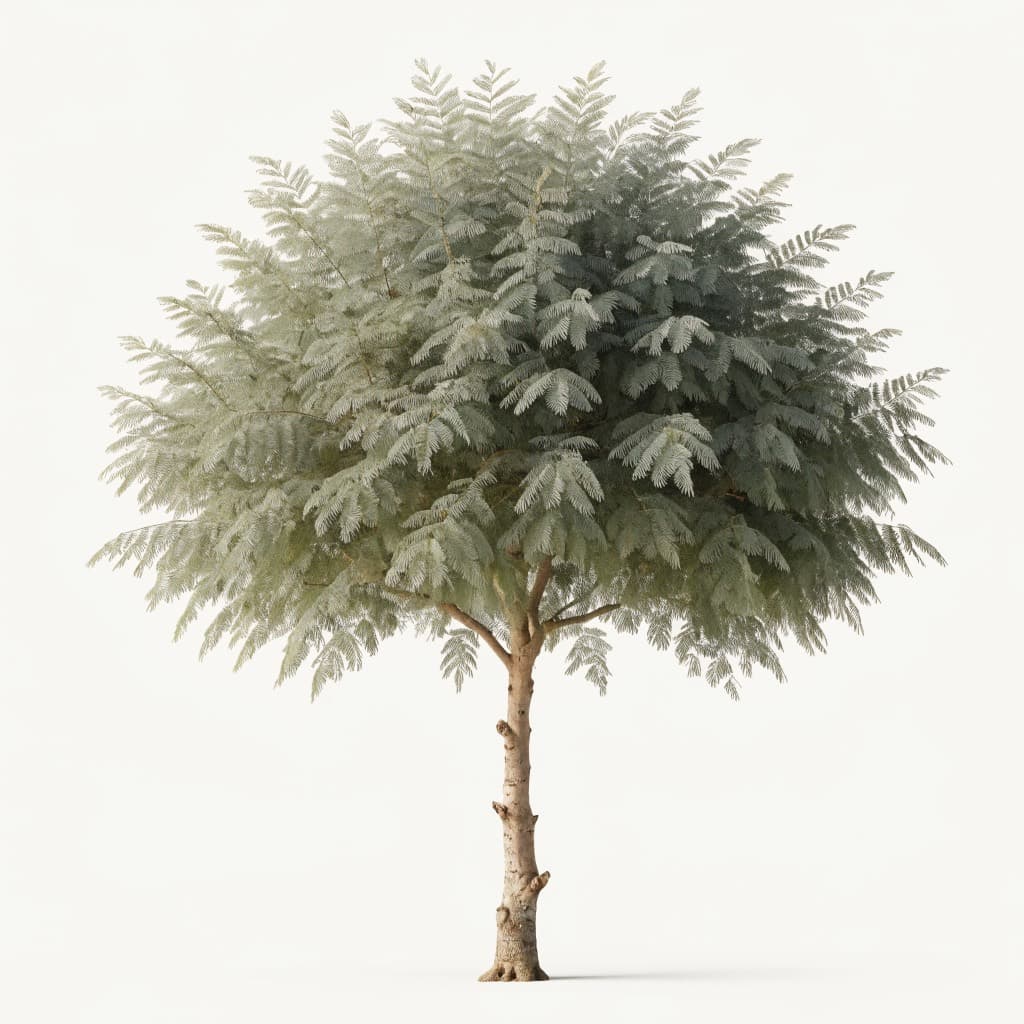
8.Ghaf Tree — UAE National Tree
Prosopis cineraria · AED 449
The UAE's national tree, and the definition of low maintenance once established — it taps groundwater and survives on what falls. Slow. Plant it for the decade, not the season.
The UAE's national tree, adapted to this exact climate over millennia. Once established it needs almost no irrigation, which makes it the most water-efficient shade tree you can plant here.
9.Sidr Tree (Ziziphus)
Ziziphus spina-christi · AED 429
Native, fruiting, deeply rooted and effectively unkillable once it takes. Gives real shade, which lowers the water demand of everything planted beneath it.
Native, edible-fruited and deeply drought-tolerant. Like the Ghaf it is thorny, so site it away from paths and play areas.
What we left out, and why
- Lawn grass — The highest-maintenance surface available in this climate — daily irrigation through summer and constant feeding. If low input is the goal, gravel with drought-tolerant planting uses a fraction of the water.
- Hibiscus and most flowering shrubs — Genuinely beautiful here and genuinely daily in July. They belong on an irrigated bed, not in a low-input scheme.
Common questions
Which plants survive a UAE summer if I travel for a month?
Agave, Yucca, Euphorbia, Desert Rose and Portulacaria will hold for several weeks in the ground, and roughly one to two weeks in a pot, without attention. Anything in a container still needs a drip timer for a month away in July — pot volume, not species, is the limit at that point.
Do drought-tolerant plants still need irrigation in the UAE?
During establishment, yes — typically the first one to two summers, watered deeply but infrequently so roots go down rather than sideways. After that most of the plants on this page survive on a long interval, and several natives manage with almost none.
Why did my succulents die in a UAE garden bed?
Usually drainage rather than heat. Villa beds are often compacted and irrigated daily for lawns and shrubs, which keeps the root zone permanently wet — succulents rot in those conditions. Plant them raised, in gritty free-draining substrate, and on a separate irrigation zone from the thirsty planting.