UAE plant guide
Which plants tolerate salt and coastal conditions in the UAE?
Salt kills plants in UAE coastal gardens three separate ways: airborne spray on the leaves, salinity in sandy soil, and dissolved salts in brackish well water or treated sewage effluent used for irrigation. A plant can tolerate one and fail on another.
Everything below handles at least two of the three. If your plot is within a couple of hundred metres of the Gulf, or you irrigate from a well or a TSE line, start with this list rather than a general outdoor range.
| Plant | Light | Water (in AC) | Mature height | Difficulty | Pet safe | Price |
|---|---|---|---|---|---|---|
| Wild Jasmine Hedge (Clerodendrum) — 5 PlantsClerodendrum inerme | Part sun | Every 4-6 days | 150-250 cm | Very easy | Partly | AED 189 |
| Sea Hibiscus (Hibiscus tiliaceus)Hibiscus tiliaceus | Full sun | Every 4-6 days | 400-600 cm | Very easy | Yes | AED 119 |
| Sea Purslane (Sesuvium) Tray — 6 PlantsSesuvium portulacastrum | Full sun | Every 7-10 days | 10-20 cm | Very easy | Yes | AED 55 |
| Copperpod / Yellow Flame (Peltophorum)Peltophorum pterocarpum | Full sun | Every 7-10 days | 800-1200 cm | Easy | Yes | AED 269 |
| Damas Tree (Conocarpus)Conocarpus lancifolius | Full sun | Every 7-10 days | 800-1500 cm | Very easy | Yes | AED 149 |
| Silver Damas Ball (Conocarpus)Conocarpus lancifolius 'Sericeus' | Full sun | Every 7-10 days | 150-250 cm | Very easy | Yes | AED 199 |
| Railroad Vine (Ipomoea) — 3 PlantsIpomoea pes-caprae | Full sun | Every 5-7 days | 20-40 cm | Very easy | Partly | AED 79 |
| Mediterranean Fan Palm — Multi-TrunkChamaerops humilis | Full sun | Every 10-14 days | 200-300 cm | Very easy | Yes | AED 899 |
The picks, in order
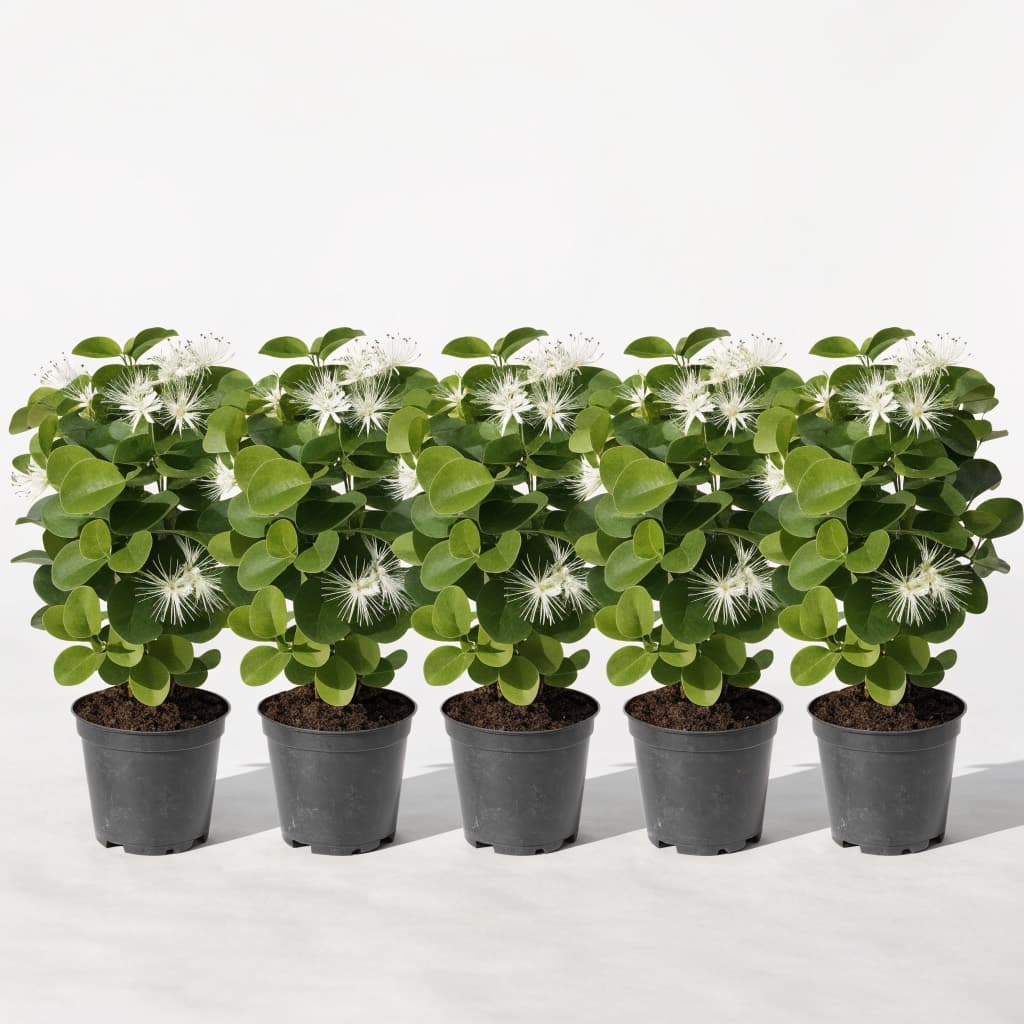
1.Wild Jasmine Hedge (Clerodendrum) — 5 Plants
Clerodendrum inerme · AED 189
The standard hedge for Gulf beachfront properties. Glossy leaves shrug off airborne salt, and it holds under brackish and TSE irrigation. If a ficus hedge on your plot browns from the outside in each summer, this is the direct replacement.
Safety: Fruit and leaves cause stomach upset if eaten in quantity.
The hedge that holds on a salt-sprayed Gulf plot or under brackish TSE irrigation, where a ficus hedge browns off and dies back.
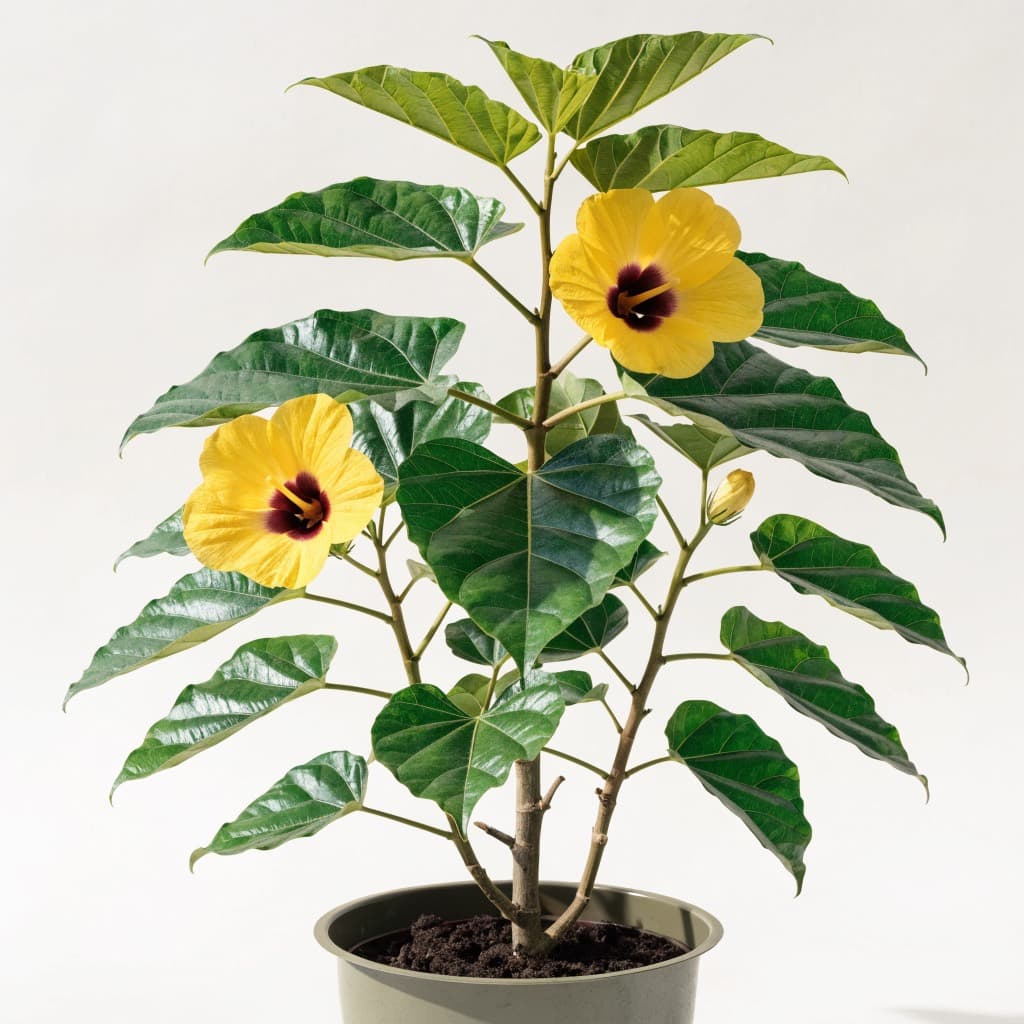
2.Sea Hibiscus (Hibiscus tiliaceus)
Hibiscus tiliaceus · AED 119
The fast coastal tree. Large heart-shaped leaves, flowers that shift yellow to bronze-red in a day, and real tolerance of salt spray and poor sand. Grows to 4-6m or clips to a tall screen — the quickest way to get height on an exposed coastal plot.
The coastal tree hibiscus, not the bedding one — flowers open yellow and turn bronze-red by evening, and it takes salt spray that kills ornamental hibiscus outright.
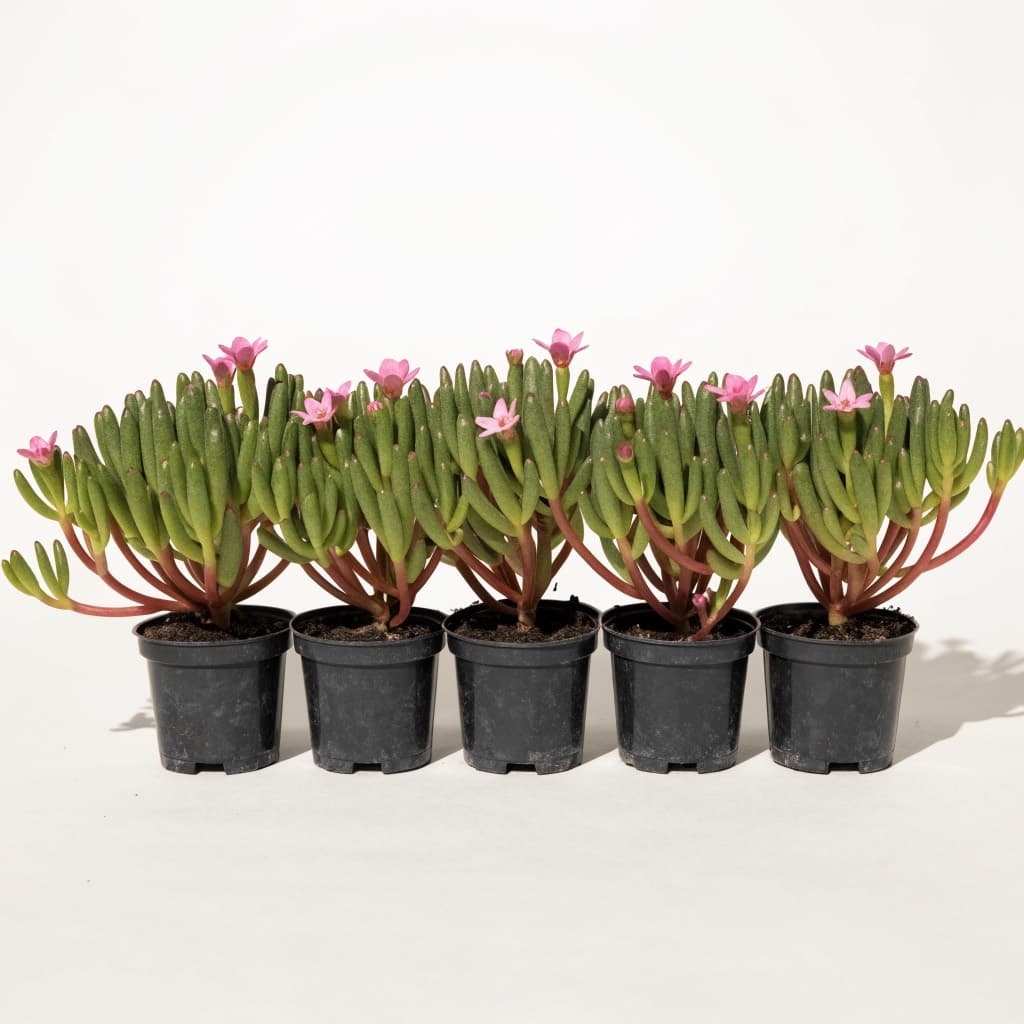
3.Sea Purslane (Sesuvium) Tray — 6 Plants
Sesuvium portulacastrum · AED 55
A native UAE beach plant, which tells you everything: it grows in salt, in sand, on almost no fresh water. Use it for banks, sandy verges and any bed on a brackish line. In a well-irrigated inland bed it works but gets out-competed, so save it for the hard ground.
Grows natively on UAE beaches in salt and sand — the ground cover for a coastal plot or a bed irrigated with brackish TSE water.
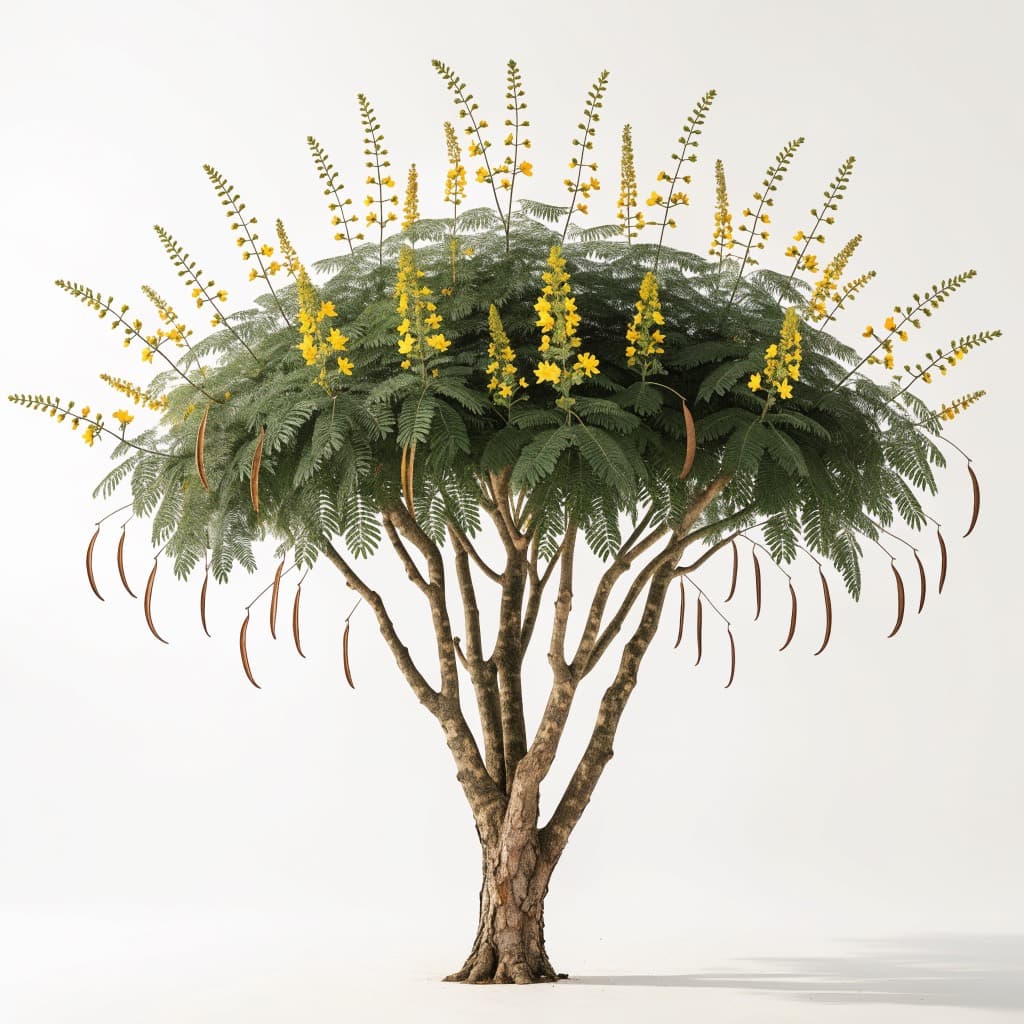
4.Copperpod / Yellow Flame (Peltophorum)
Peltophorum pterocarpum · AED 269
The best flowering shade tree for a coastal plot — it takes salt wind, holds its canopy through summer, and still gives yellow flower sprays. Choose it over a flame tree anywhere within reach of sea air.
Holds its canopy through a Gulf summer and takes coastal salt wind, which is why it shades more UAE car parks than any other flowering tree.
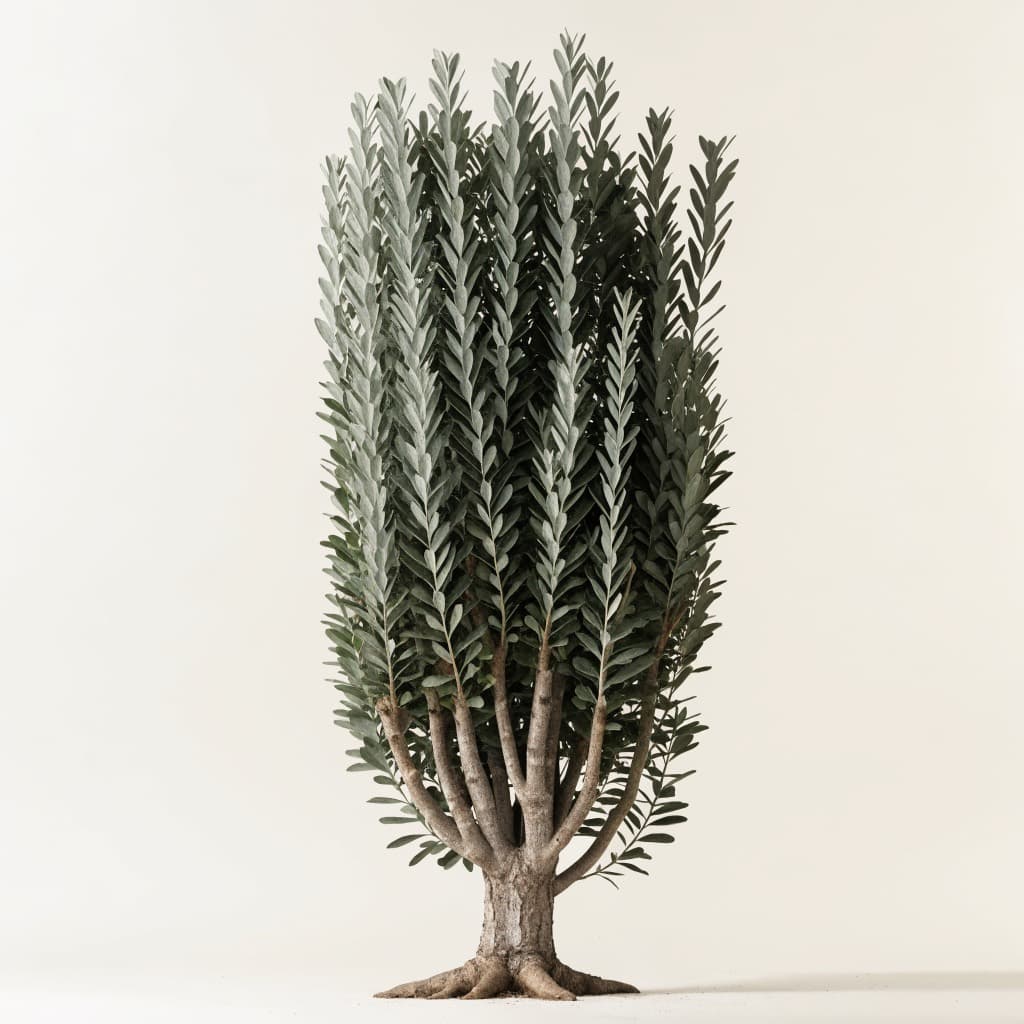
5.Damas Tree (Conocarpus)
Conocarpus lancifolius · AED 149
Conocarpus is what the UAE plants along coastal highways precisely because salt, heat and wind do not bother it. Fast, evergreen, and it takes hard pruning. Watch the roots near structures, and give it room.
What the UAE plants along coastal highways because salt, heat and wind do not touch it — fast and evergreen, but the roots are vigorous, so keep it clear of structures.
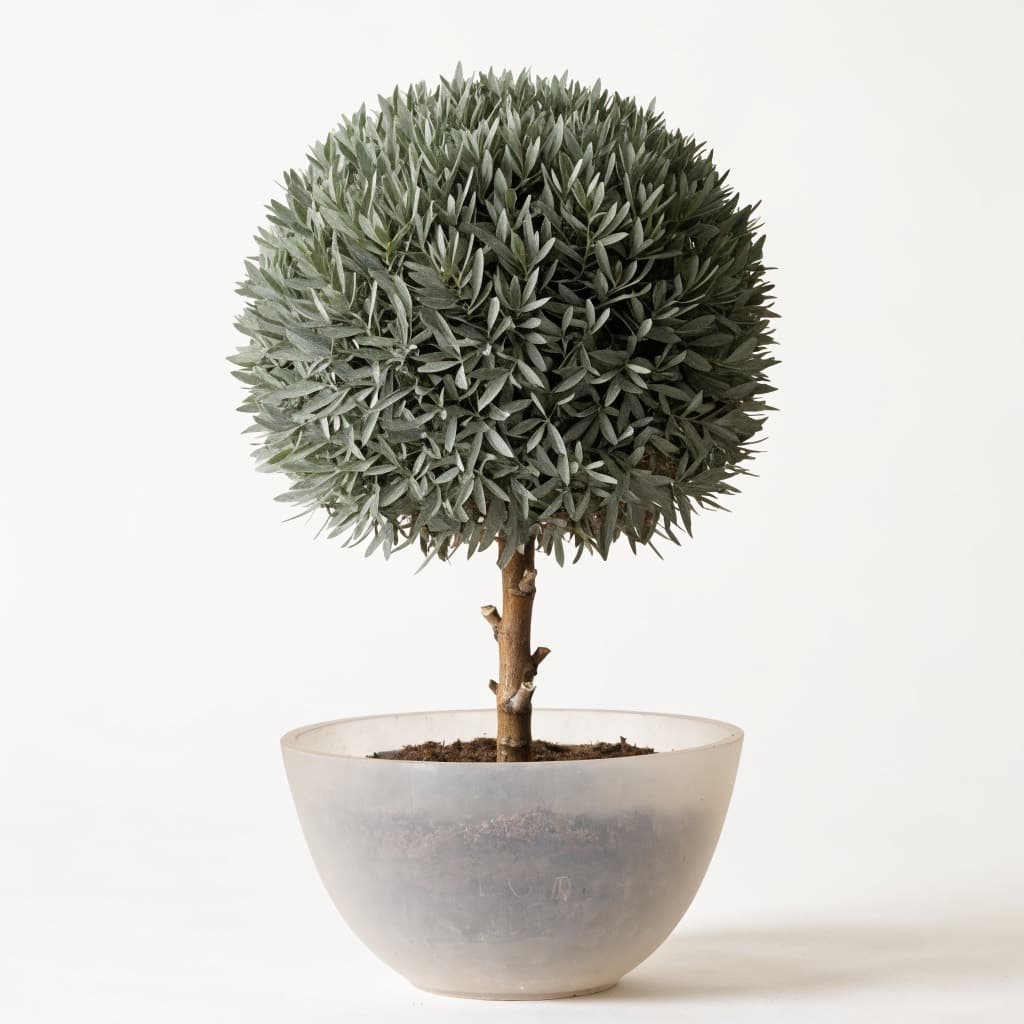
6.Silver Damas Ball (Conocarpus)
Conocarpus lancifolius 'Sericeus' · AED 199
The same conocarpus toughness in a clipped formal ball, with silver-grey foliage that reads well against sand and pale render. The one to use for structure on a coastal plot where a boxwood or conifer would be dead within a season.
Takes salt wind, reflected heat and hard clipping — the silver form is the same tough conocarpus lining UAE highways, just grown as a formal ball.
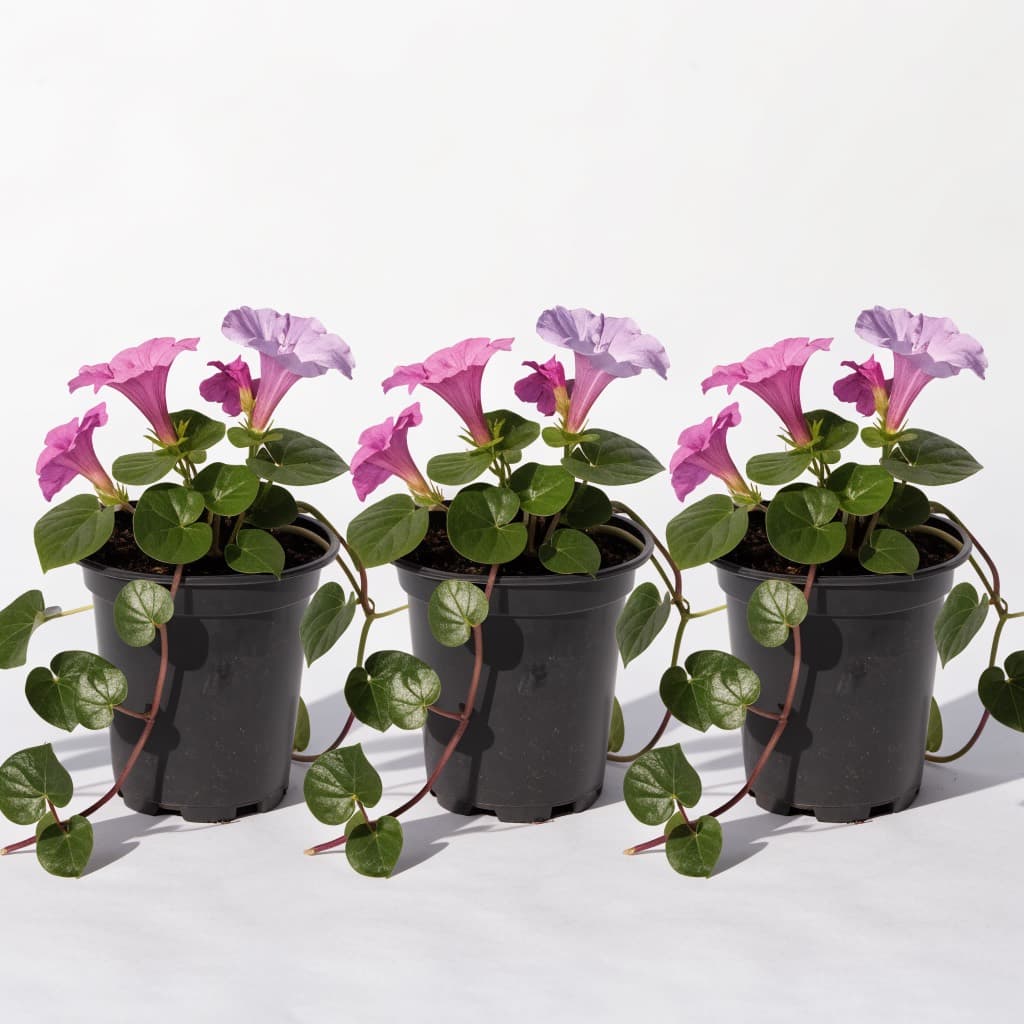
7.Railroad Vine (Ipomoea) — 3 Plants
Ipomoea pes-caprae · AED 79
Beach morning glory — it runs across loose coastal sand, holds it in place and flowers pink-purple each morning. Deliberately vigorous, so use it on banks and verges rather than in a designed bed.
Safety: Seeds of Ipomoea species are toxic if eaten in quantity.
Runs metres in a season and holds loose sand in place — deliberately vigorous, so keep it off anything you do not want covered.
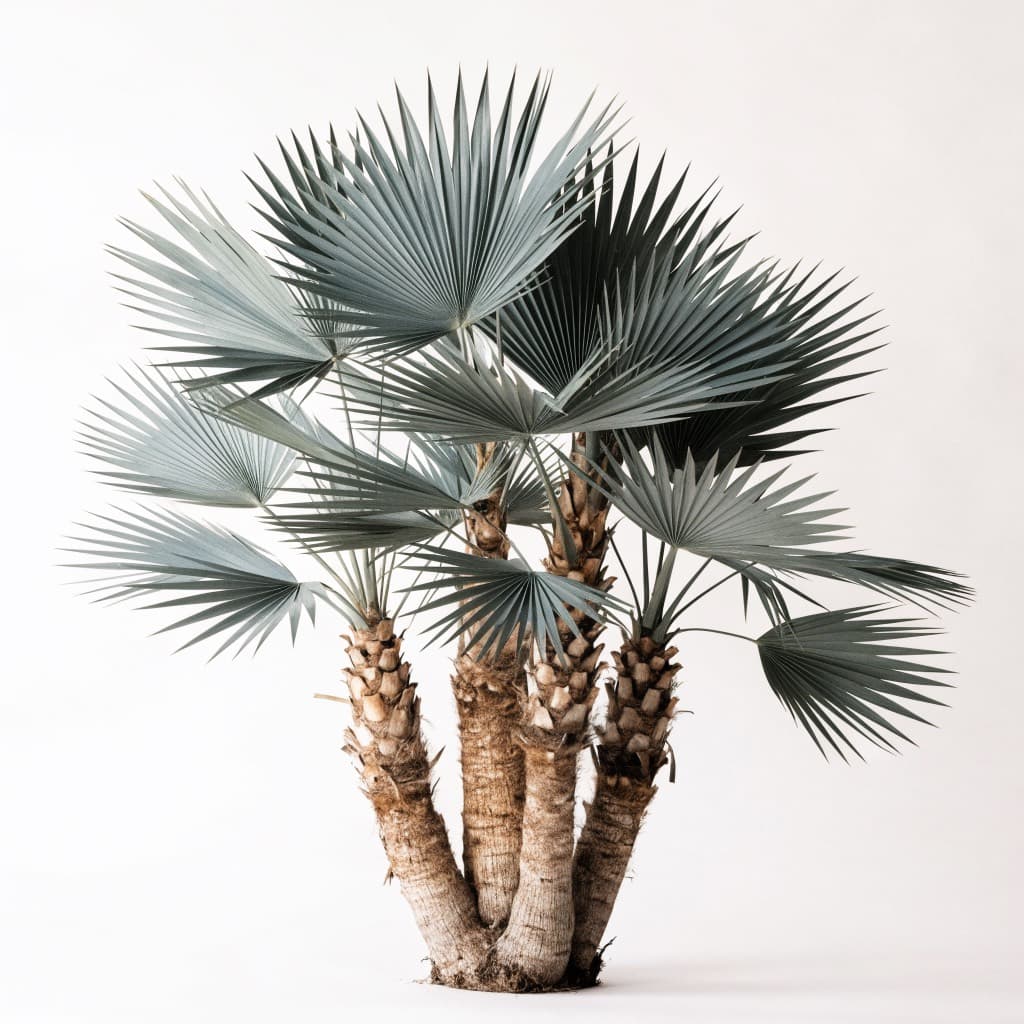
8.Mediterranean Fan Palm — Multi-Trunk
Chamaerops humilis · AED 899
The most salt- and drought-tolerant palm we stock, and it stays at 2-3m so it suits a coastal courtyard or pool surround. Slower than an areca but far more likely to be alive in five years on an exposed plot.
The most drought-tolerant palm in the range and the only one that stays villa-sized — it clumps to 2-3m instead of running for the sky like a date or foxtail palm.
What we left out, and why
- Calathea, ferns and most indoor foliage — Anything grown for thin, soft leaves burns on salt spray within days. Coastal outdoor positions are not a place for houseplants moved outside, however sheltered the terrace looks.
- Ficus nitida on a beachfront boundary — It is the UAE's default hedge, and it is the wrong one within salt-spray range. It browns from the leaf edges inward and never fully recovers. Clerodendrum does the same job in that position.
Common questions
Can I irrigate a UAE garden with treated sewage effluent (TSE)?
Yes, and many UAE communities do — but TSE carries elevated salts, so it narrows your plant list to salt-tolerant species and makes periodic deep flushing with fresh water important to stop salts accumulating in the root zone.
How do I know if salt is what is damaging my plants?
Salt damage shows as browning that starts at leaf tips and edges and works inward, often worse on the side facing the sea or the sprinkler. Overwatering browns differently — yellowing first, from the oldest leaves, with soft stems. A white crust on the soil surface confirms salt build-up.
Does adding gypsum help salty soil in the UAE?
Gypsum helps sodic soil by displacing sodium from clay particles, but most UAE coastal soil is sand rather than clay, so the bigger lever is leaching — irrigate deeply and periodically with fresh water so salts move below the root zone rather than concentrating in it.