UAE plant guide
What plants handle the wind on a high-floor balcony in Dubai?
Everyone plans a Dubai balcony around heat. Above roughly the 20th floor in Marina, JLT, Business Bay or Reem Island, the thing that actually destroys planting is wind — sustained, unobstructed and frequently carrying fine sand.
Wind damages plants in three ways at once. It shreds large soft leaves along their veins. It strips moisture faster than roots can replace it, so a plant that is watered adequately still browns at the edges. And it physically topples tall pots, which on a high balcony stops being a gardening problem and becomes a safety one.
So the selection rule inverts what you would use at ground level: small leaves, flexible stems or strappy foliage that moves with the gust, and a low centre of gravity.
| Plant | Dubai balcony, summer | Light | Water (in AC) | Pet safe | Mature height | Price |
|---|---|---|---|---|---|---|
| Ornamental Fountain GrassPennisetum setaceum | Yes, full sun | Full sun | Every 5-7 days | Yes | 60-120 cm | AED 69 |
| Purple Fountain Grass (Pennisetum Red)Pennisetum setaceum 'Rubrum' | Yes, full sun | Full sun | Every 7-10 days | Yes | 90-120 cm | AED 75 |
| Agave (Blue Attenuata)Agave attenuata | Yes, full sun | Full sun | Every 21-30 days | No | 60-120 cm | AED 79 |
| Desert Rose (Adenium)Adenium obesum | Yes, full sun | Full sun | Every 14-21 days | No | 40-80 cm | AED 119 |
| Bougainvillea 'Pink Pixie'Bougainvillea glabra 'Pixie' | Yes, full sun | Full sun | Every 5-7 days | Partly | 30-60 cm | AED 49 |
| Flax Lily (Dianella) — 3 PlantsDianella tasmanica | Yes, full sun | Part sun | Every 5-7 days | Partly | 50-80 cm | AED 99 |
| Elephant Bush (Portulacaria afra)Portulacaria afra | Shade only | Bright, indirect | Every 14-21 days | Yes | 100-150 cm | AED 65 |
| Dwarf Date Palm — 150cmPhoenix roebelenii | Yes, full sun | Full sun | Every 5-8 days | Partly | 120-200 cm | AED 499 |
The picks, in order
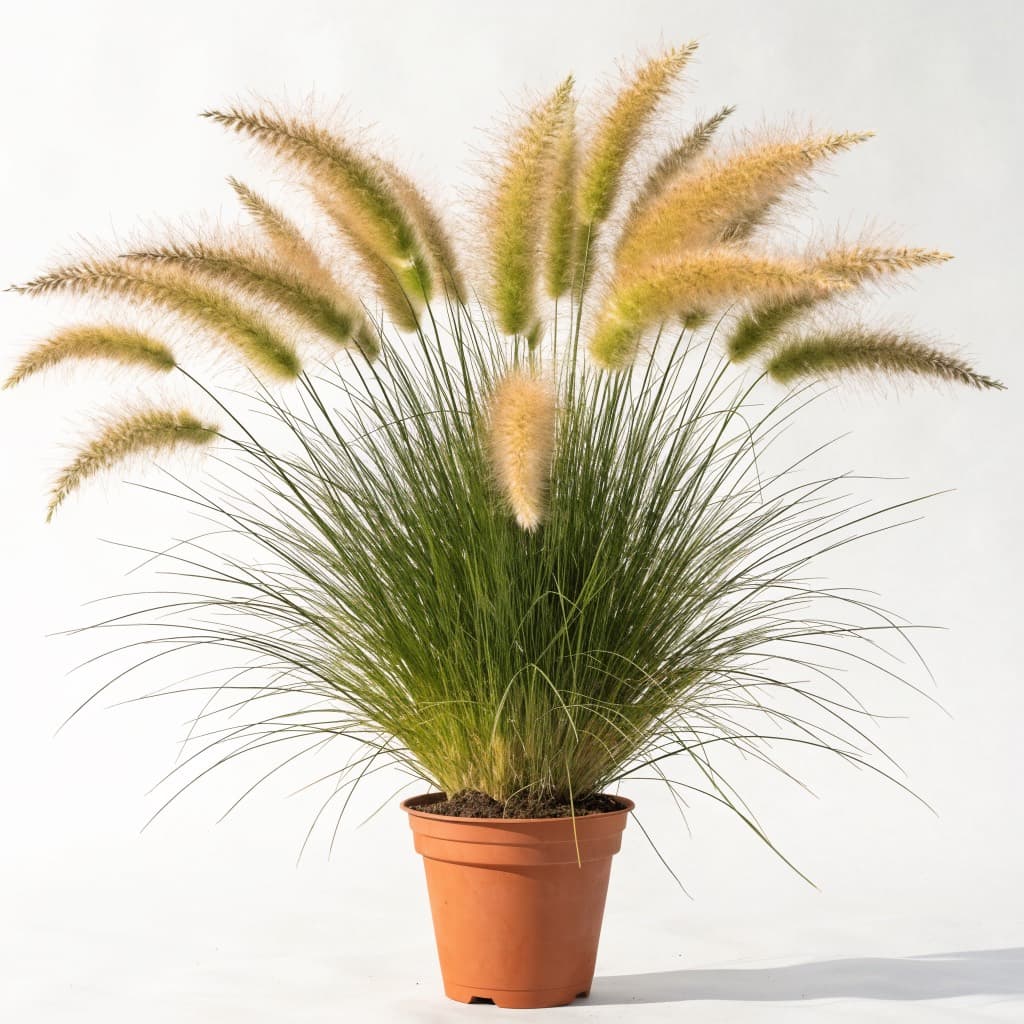
1.Ornamental Fountain Grass
Pennisetum setaceum · AED 69
The best wind plant we sell, because movement is the point rather than the damage. Pet-safe and cheap enough to refresh seasonally. Deadhead it if you have neighbours below — it seeds freely.
Movement on a windy high floor, where a stiff shrub just looks battered. Cut it to a fist in late winter and it comes back thicker; it seeds itself freely, so deadhead if you have neighbours below.
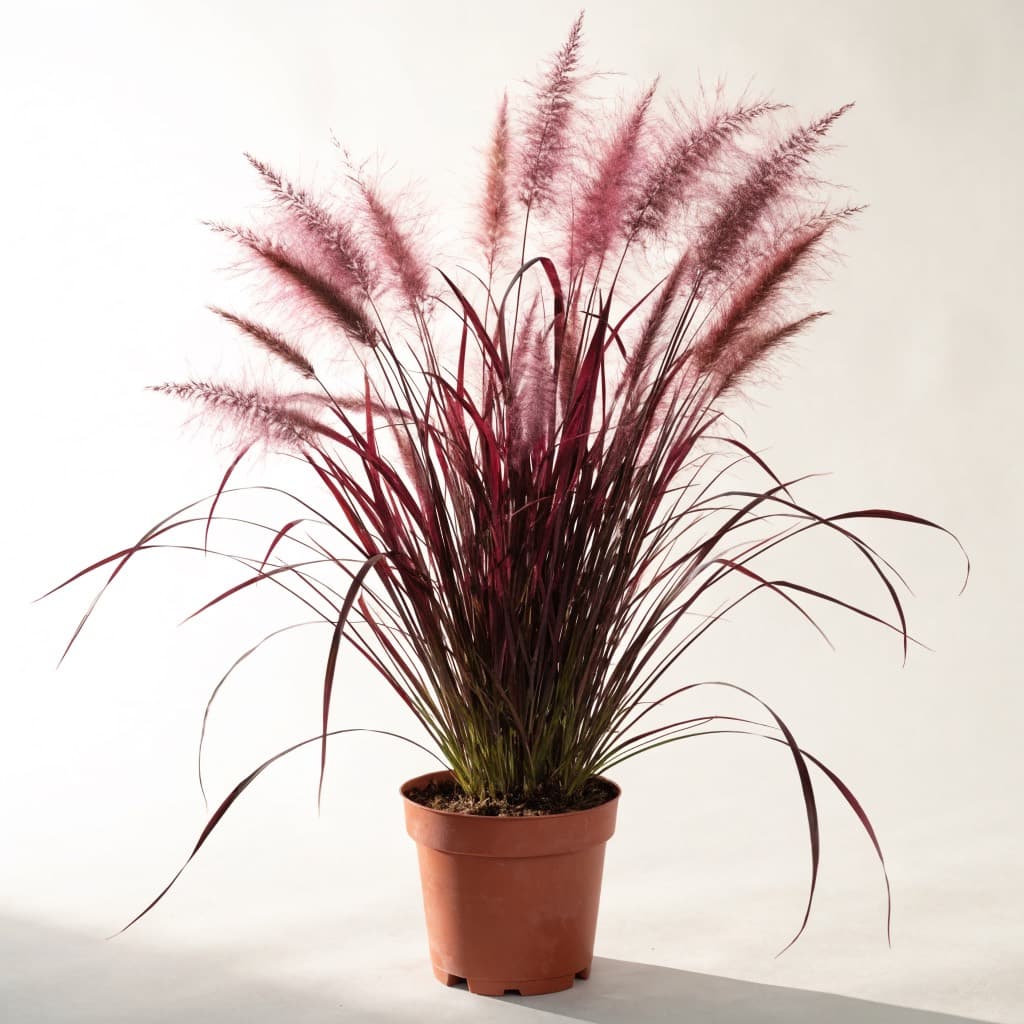
2.Purple Fountain Grass (Pennisetum Red)
Pennisetum setaceum 'Rubrum' · AED 75
The same flex with burgundy colour, which stops an all-green wind planting looking like a maintenance strip.
The burgundy colour only holds in full sun — in shade it reverts towards green, which defeats the point of choosing the red form.
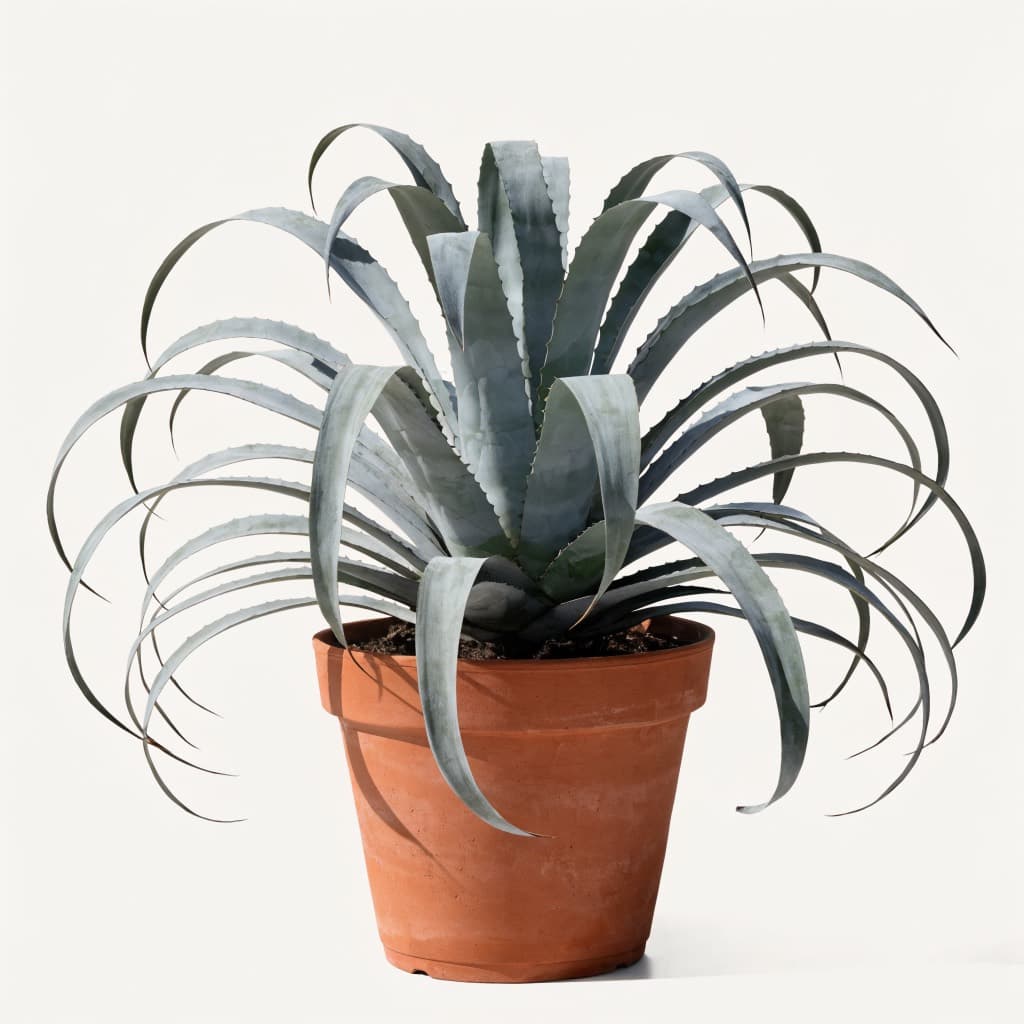
3.Agave (Blue Attenuata)
Agave attenuata · AED 79
Nothing to tear, a low profile and real weight once potted. Site it away from where people pass — the spines are sharp, and a confined balcony gives you nowhere to step back.
Safety: Saponins in the sap, plus rigid terminal spines that can injure.
Effectively irrigation-free once rooted. Keep the spine tips away from walkways — on a young agave they are at eye level for a child.
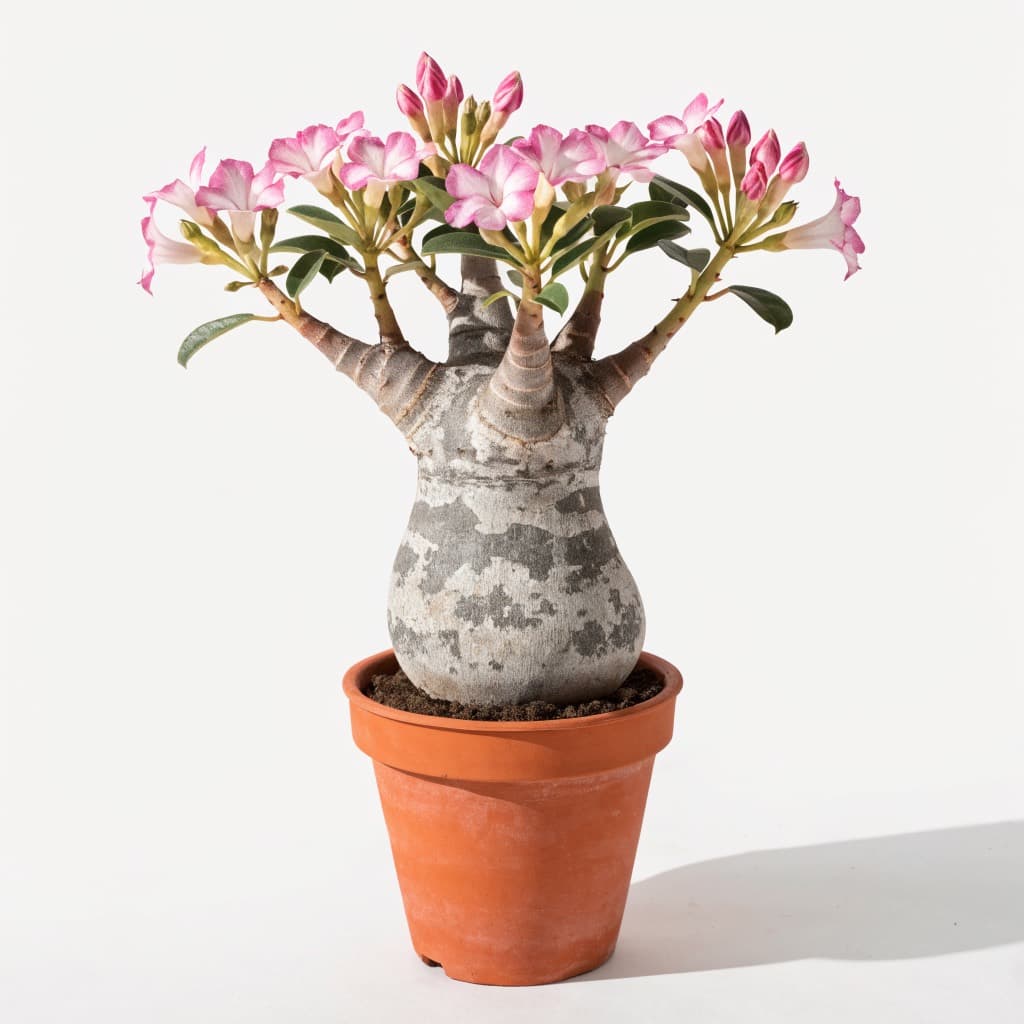
4.Desert Rose (Adenium)
Adenium obesum · AED 119
A thick stem and small leaves ride out gusts that strip softer plants, and the low swollen base keeps the centre of gravity where you want it.
Safety: Cardiac glycosides throughout the plant — genuinely dangerous to cats, dogs and children if eaten. Keep out of reach.
Native to the Arabian peninsula's climate and completely at home in UAE heat — the caudex stores water, so it is the lowest-maintenance flowering plant on a sunny balcony.
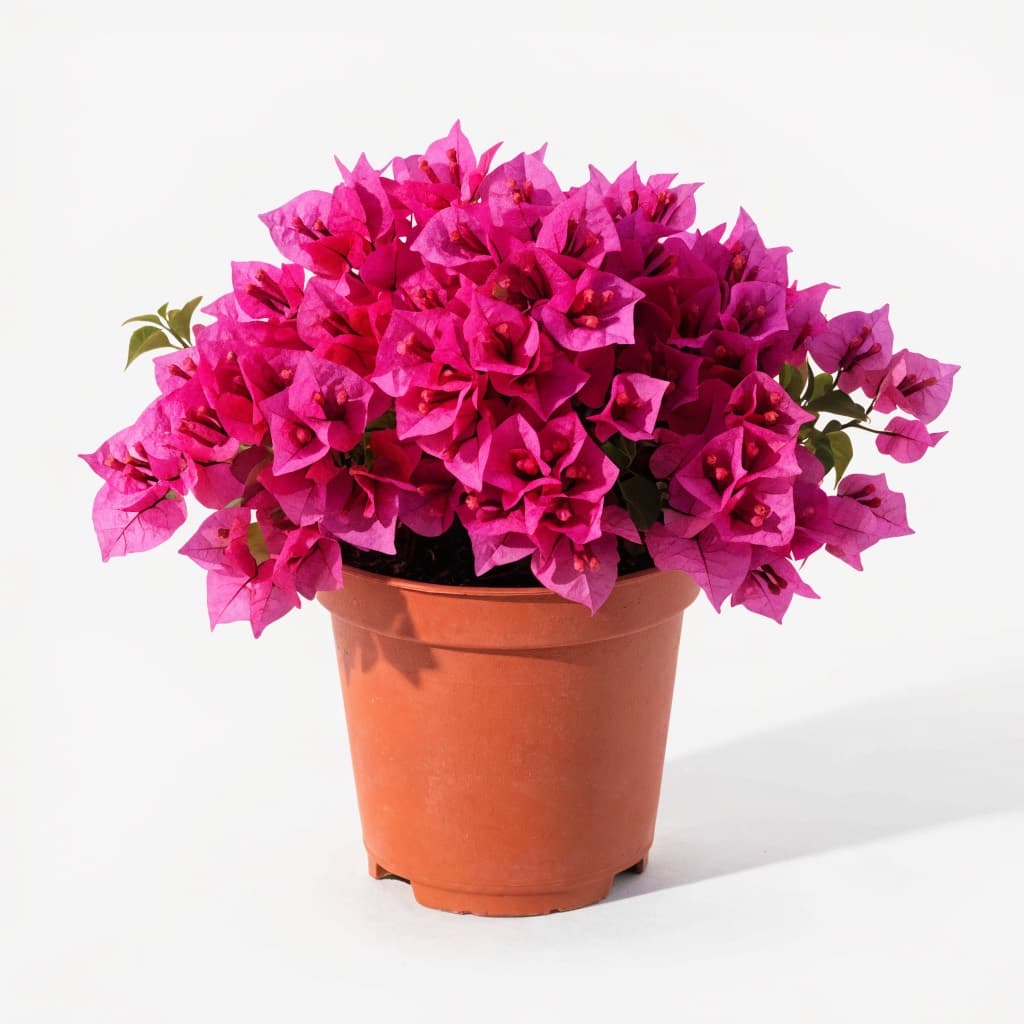
5.Bougainvillea 'Pink Pixie'
Bougainvillea glabra 'Pixie' · AED 49
Small leaves and flexible growth, so it moves instead of tearing. Keep it dwarf and tie in long shoots before they catch wind like a sail.
Safety: Thorns, and a sap that irritates skin. The scratch is the realistic risk, not poisoning.
Dwarf bougainvillea, bred to stay in a pot. Counter-intuitive rule that catches everyone: it flowers when you keep it slightly dry and hungry — water and feed it generously and you get a healthy green bush and nothing else.
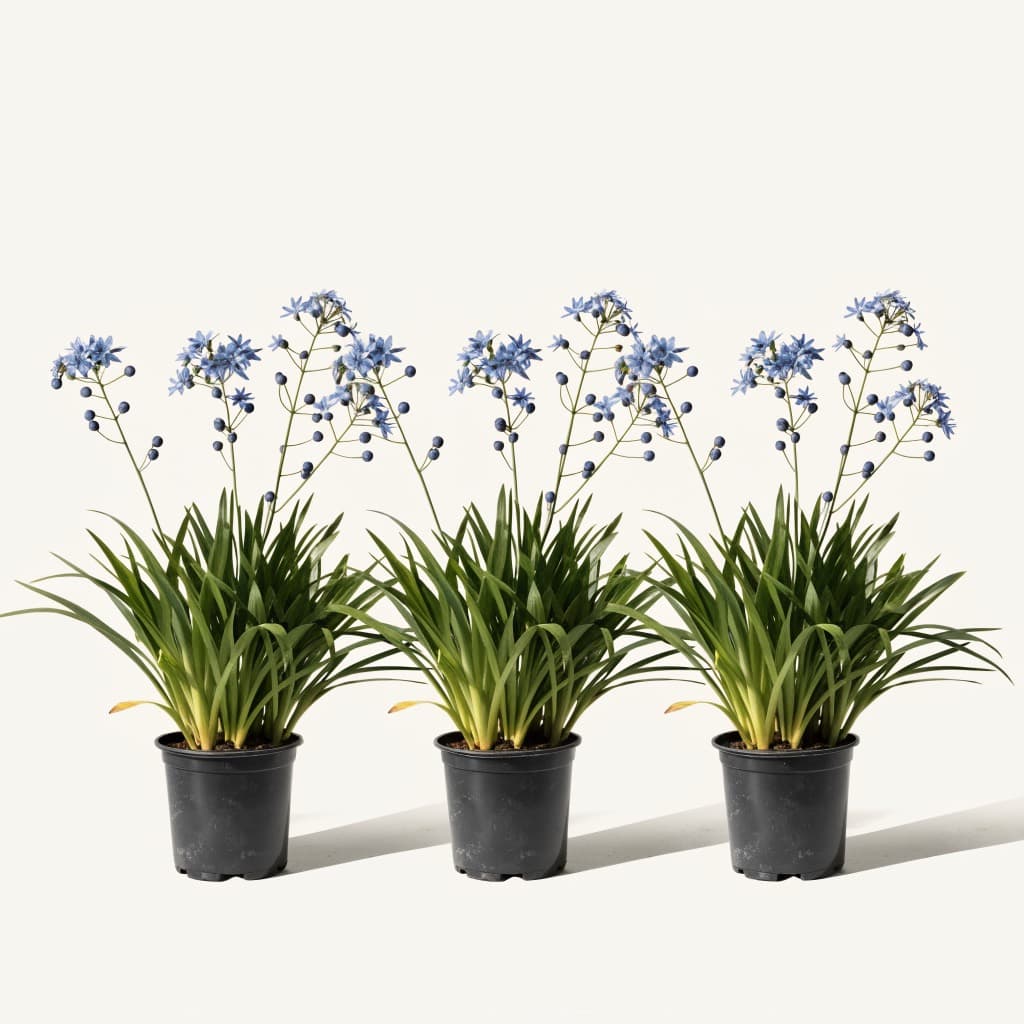
6.Flax Lily (Dianella) — 3 Plants
Dianella tasmanica · AED 99
Strappy foliage designed by evolution for exposed positions, and it takes part sun, so it works on the shaded end of a windy balcony where grasses go thin.
Safety: Berries are not edible and cause stomach upset if eaten.
Gives a bed the vertical structure an ornamental grass does, but stays evergreen and tidy instead of dying back each year — and it works in real shade too.
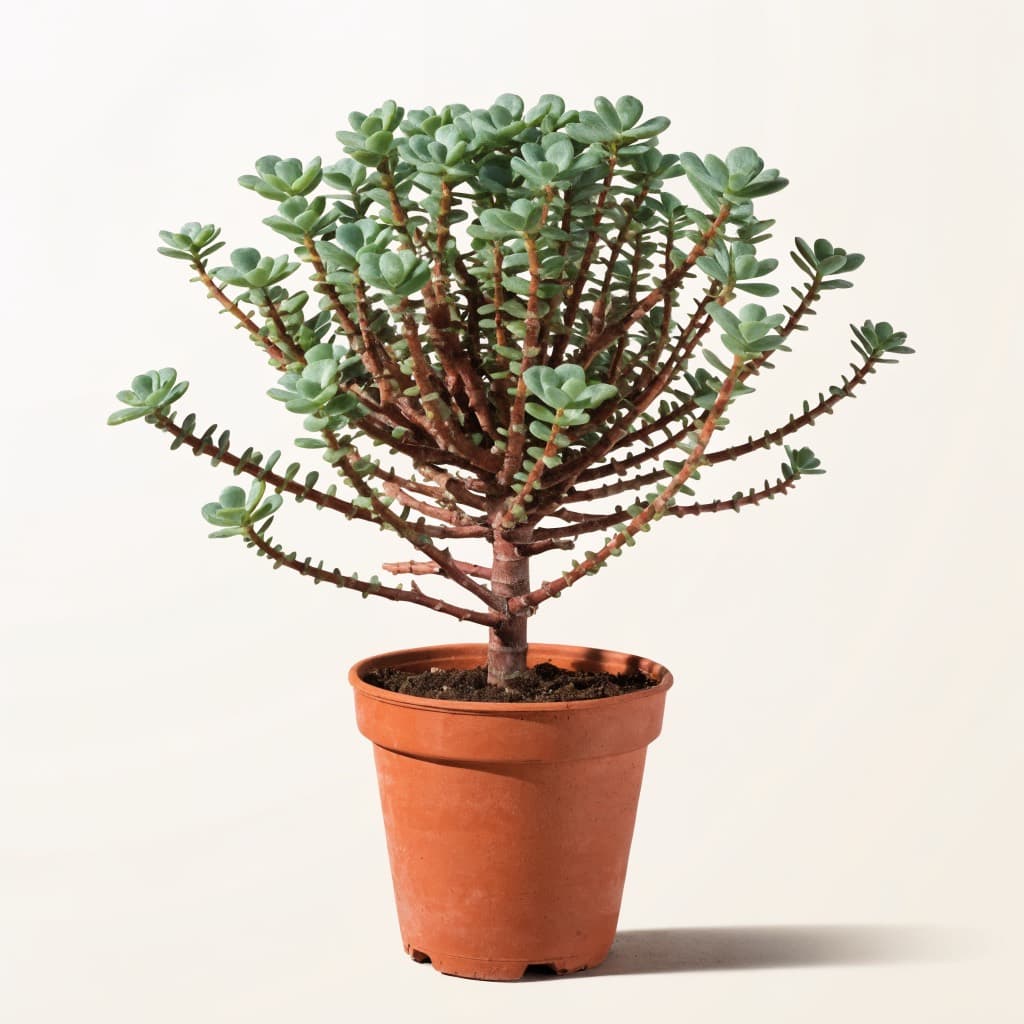
7.Elephant Bush (Portulacaria afra)
Portulacaria afra · AED 65
Thick tiny leaves on woody stems — structurally the best-suited shape on this list, and it stores water, which offsets the drying effect of constant air movement.
Rare combination here: a shrub-sized succulent that is genuinely non-toxic to cats and dogs, tolerates AC air, and clips into shape like a hedge plant.
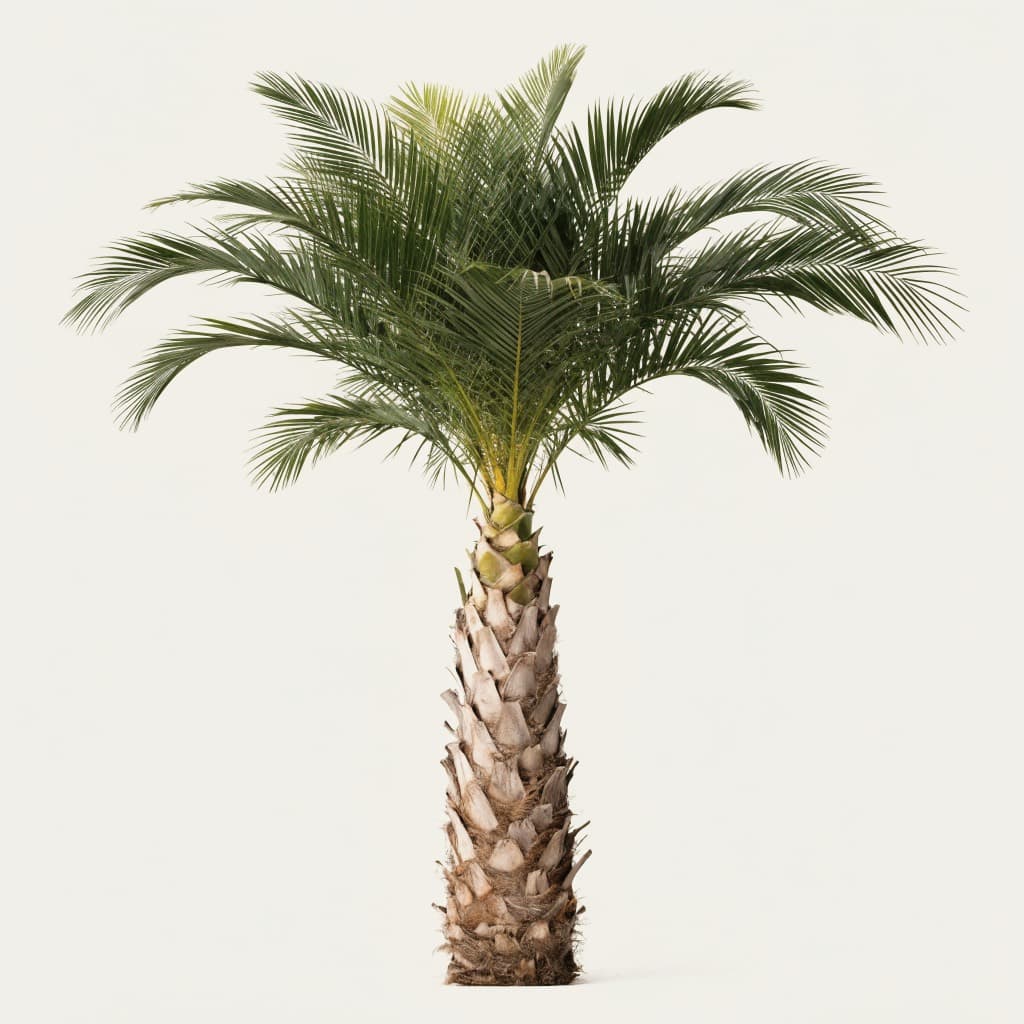
8.Dwarf Date Palm — 150cm
Phoenix roebelenii · AED 499
The only substantial height we recommend at altitude. Stiff fronds handle wind far better than a soft-leaved palm, but pot it heavy and low, and check the anchor after a shamal.
Safety: Sharp spines at the frond base can puncture skin.
The regionally appropriate palm for a courtyard or a large balcony, at a fraction of a full date palm's footprint.
What we left out, and why
- Ravenala (Traveller's Palm) — Spectacular at ground level and a poor high-floor choice — wind shreds the fan into ribbons within a season.
- Monstera and other large-leaf foliage — The leaves tear along the veins in a single windy afternoon, and they are indoor plants sunburning outdoors in any case.
- Tall narrow pots — Not a plant, but the most common failure. A tall pot on a high balcony is a falling object. Use wide, heavy, low containers and keep them inside the railing line.
Common questions
Why do my balcony plants have brown crispy edges even though I water them?
On a high floor that is usually wind desiccation, not underwatering. Constant air movement pulls moisture from the leaf faster than the roots can resupply it, so the margins die back first. A windbreak on the prevailing side, larger pots and grouping plants together all reduce it more than extra water does.
Are there rules about plants on balconies in Dubai towers?
Most Dubai towers regulate balconies through the building's own rules rather than a single city-wide law, and the common restrictions are on fixing anything to the railing, hanging pots on the outside of the balustrade, and water draining onto the balcony below. Check your OA or tenancy rules before you mount rail planters, and use saucers as standard.
How do I stop pots blowing over on a high balcony?
Choose wide low pots over tall narrow ones, use heavy material rather than plastic, add a layer of gravel at the base for ballast, and group containers so they shelter each other. Keep everything inside the railing line, and move lightweight items indoors when a shamal is forecast.