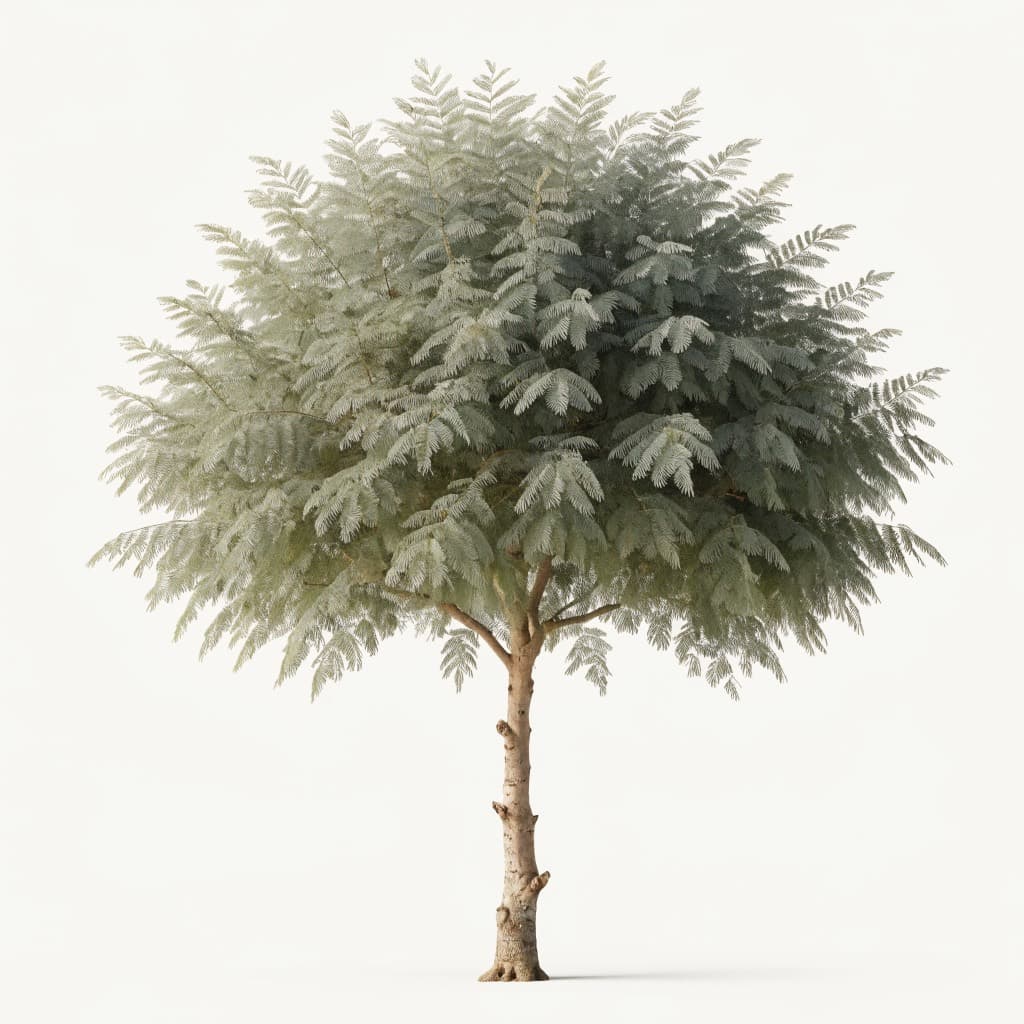
The trees that grow best in the UAE are the natives: the ghaf (Prosopis cineraria, the national tree), the sidr (Ziziphus spina-christi) and the samr acacia, which live on groundwater and rainfall once established. After them comes a short list of adapted trees that take the heat, sandy alkaline soil and salty water with irrigation: neem, copperpod, damas, tabebuia, the orchid tree, pomegranate, olive and the palms. Almost everything else survives here only on a drip line. This guide sorts them by job (shade, flowers, fruit, palms, shrubs), gives the one UAE fact that decides each, and names the trees to avoid.
Native first, adapted second, ornamental last
Every tree planted in the UAE falls into one of three groups, and the group decides how much water and attention it will need for the rest of its life. Native trees evolved here: they send a taproot down to groundwater and, once established, need little or no irrigation. Adapted trees come from other hot, dry regions: they take the heat, the sand and some salt, but they stay on irrigation. Ornamental imports from humid tropics or cool climates survive only as long as the drip line runs, and some never flower here at all.
Whichever group you choose, the planting window is the same: October to March, so the tree roots in before its first summer. Water deeply and infrequently while it establishes, then taper off. The timing is covered in the best time to plant trees and shrubs in the UAE, and we group the lowest-water plants in the UAE native collection.
Native desert trees: ghaf, sidr and samr
These are the trees the UAE landscape was built around, and the most water-efficient trees you can plant in a garden here.
- Ghaf (Prosopis cineraria): the national tree of the UAE. Evergreen through a summer in which almost nothing else is, because its taproot reaches groundwater far below the surface. Protected in the wild, slow-growing, and near-zero water once established. Our ghaf tree is supplied as an established nursery tree; the full story is in our ghaf tree growing guide.
- Sidr (Ziziphus spina-christi): another protected, deep-rooted native with broader, glossier leaves than the ghaf, denser shade, small edible fruit, and the flowers behind sidr honey. Thorny, so keep it off paths. Available as a sidr tree.
- Samr (Vachellia tortilis, formerly Acacia tortilis): the flat-topped umbrella acacia of the UAE's gravel plains and wadis. We do not stock it, but if you see one offered, it belongs in the same low-water planting as ghaf and sidr.
Adapted shade trees that take heat, salt and sand
These are not native, but they are the trees that made UAE greening work, and they are what shades most villa streets and car parks.
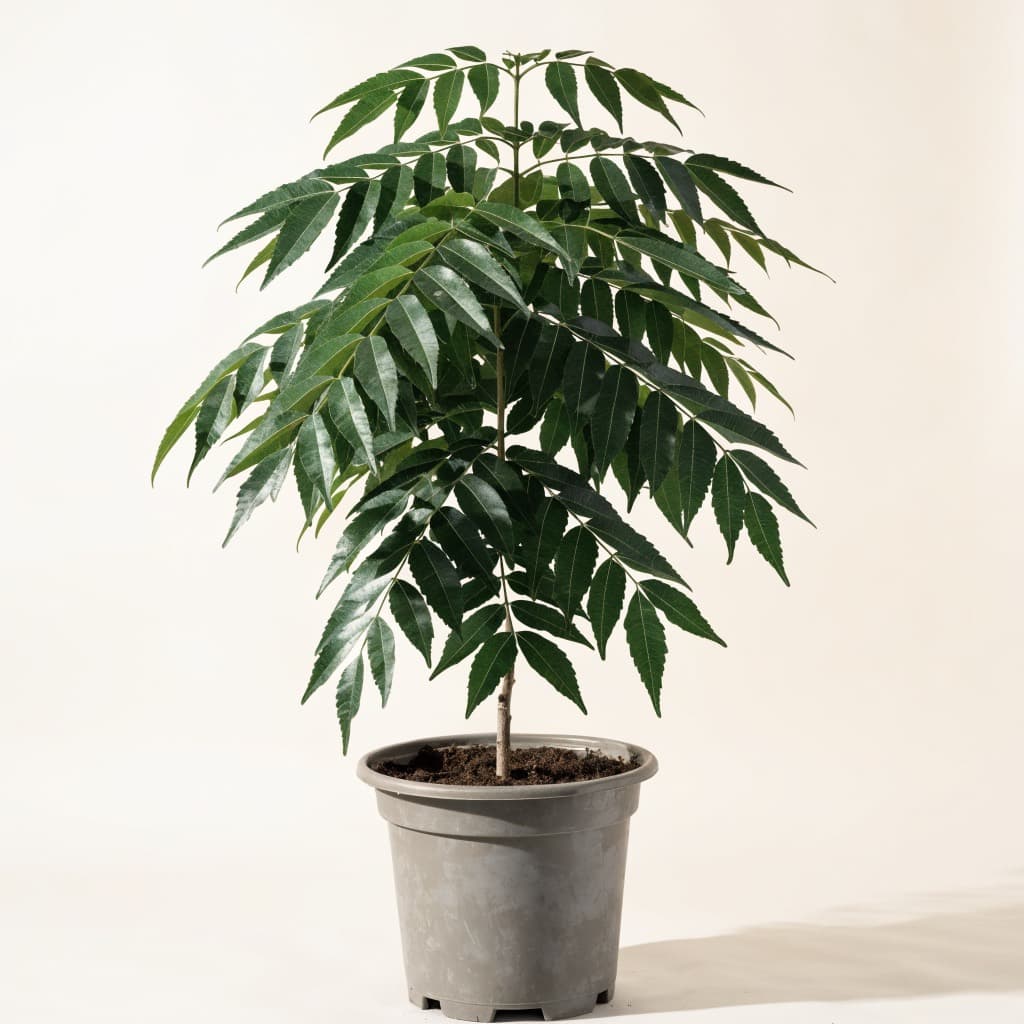
- Neem (Azadirachta indica): survives 48°C, sandy soil and brackish irrigation better than any other shade tree sold here. Its roots run wide near the surface, so plant it at least 4 metres from slabs and walls. Neem tree · neem care guide.
- Copperpod (Peltophorum pterocarpum): holds a dense canopy through a Gulf summer and takes coastal salt wind, with yellow flowers as a bonus. See the copperpod.
- Damas (Conocarpus lancifolius): the fast evergreen planted along UAE coastal highways because salt, heat and wind do not touch it. Not a native desert tree, and its roots are vigorous, so keep it well clear of buildings and pipes. Damas tree.
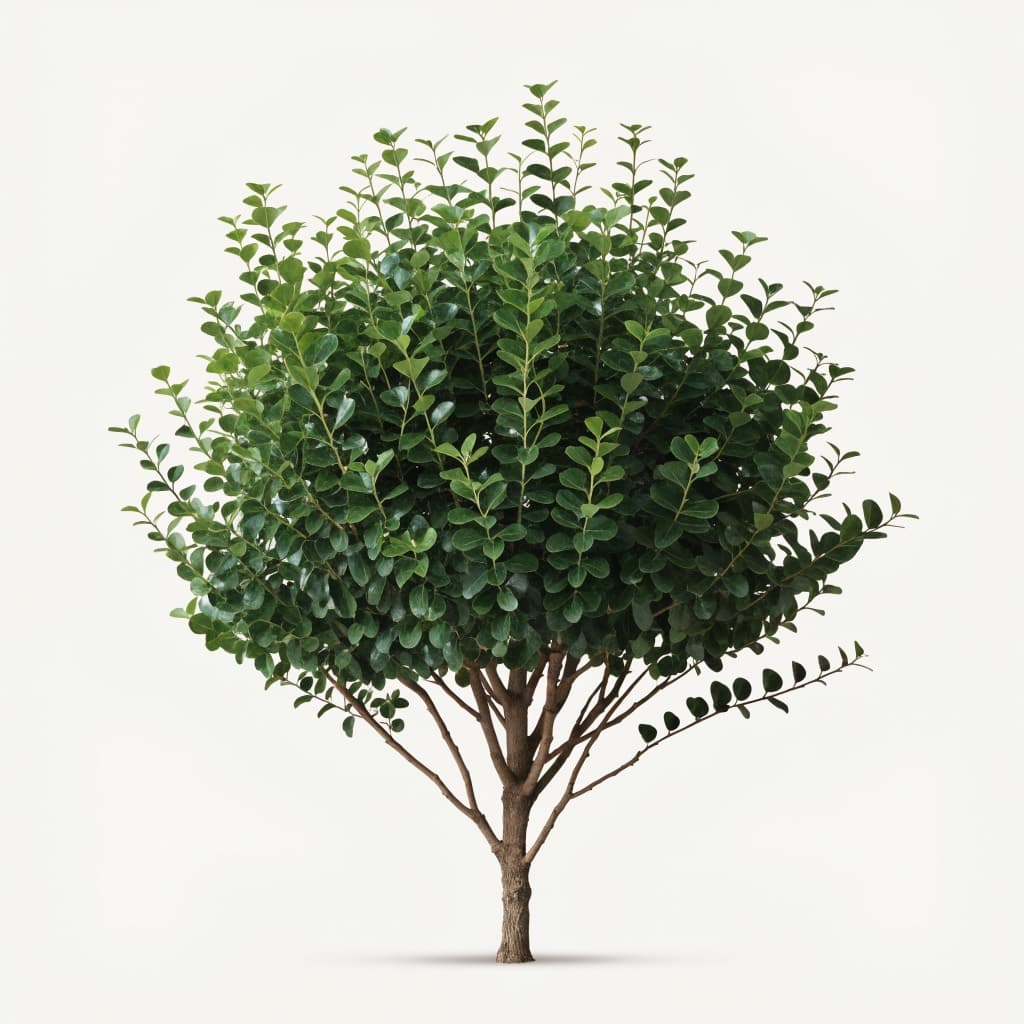
- Ficus nitida: the clipped evergreen at half the villa gates in the UAE. It takes heat, hard water and a tight trim, but it is thirsty, its roots are vigorous, and it browns within salt-spray range of the sea. See the ficus nitida ball.
Flowering trees
Pick a flowering tree by the month it flowers and by how close it will sit to paving. The full comparison is in our flowering trees guide and the ranked best flowering trees for the UAE.
- Flame tree (Delonix regia): scarlet May to July. Wide surface roots, so give it open ground at least 4 metres from hard landscaping.
- Pink trumpet tree (Tabebuia rosea): pink on bare branches for three to four weeks in spring. Well-behaved roots, which is why municipalities plant it along paved boulevards.
- Hong Kong orchid tree (Bauhinia × blakeana): mauve flowers November to March, when the garden is actually used, and it tops out near 6 metres.
- Golden shower tree (Cassia fistula): yellow flowers in hanging chains in late spring. It widens before it heightens, so allow 3 metres of clear ground.
- Yellow bells (Tecoma stans): a small tree of 3–5 metres with yellow trumpets from October, and the fastest of the group to first flowering.
- Frangipani (Plumeria rubra): scents a courtyard from May to October and stands bare from roughly December to March, which is normal.
Fruit trees that actually fruit here
Plenty of fruit trees grow in the UAE; fewer fruit reliably. The ranking with prices is in the best fruit trees for the UAE.
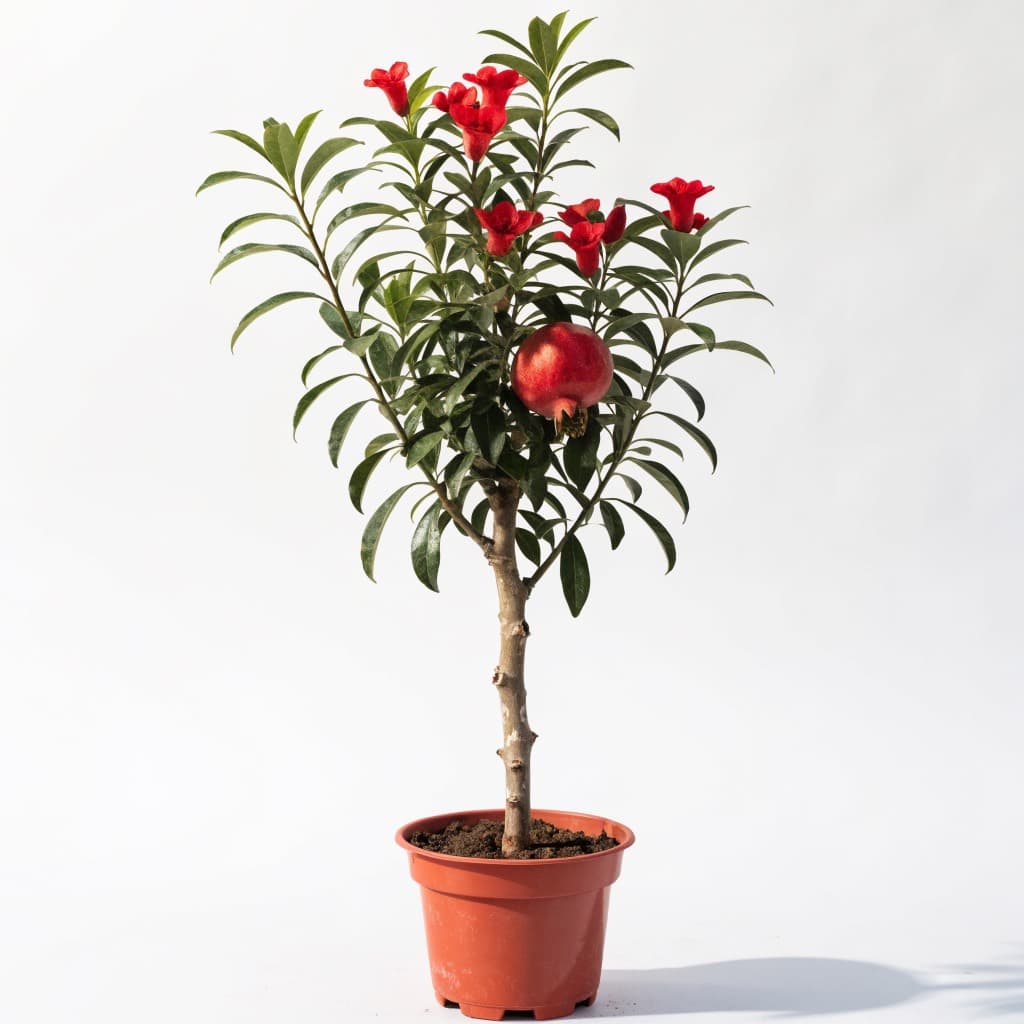
- Pomegranate: native to this climate band, and it takes Gulf heat and saline soil better than any other fruit tree we sell. It drops its leaves for a few weeks in winter; that is dormancy.
- Lemon and calamansi: citrus fruits here with full sun and deep watering that flushes salts out of the pot. Yellow leaves are usually iron lockout from alkaline tap water. The calamansi lime is the easiest to fruit in a pot; the Omani lemon tree and the mature XL lemon tree suit a sunny balcony or garden.
- Mango: grows well, but a grafted tree fruits in year three or four, and February humidity can bring powdery mildew that stops flowering. A garden tree, not a balcony one.
- Guava: fruits reliably and fast. Fruit fly is the real problem, so bag the fruit or trap in spring.
- Olive: drought-hardy and happy in full sun, but fruit needs a cool winter spell that UAE winters only marginally provide, so treat it as an ornamental tree. The XL olive tree comes with a full olive tree care guide; the main thing that kills olives here is a pot that stays wet.
Palms
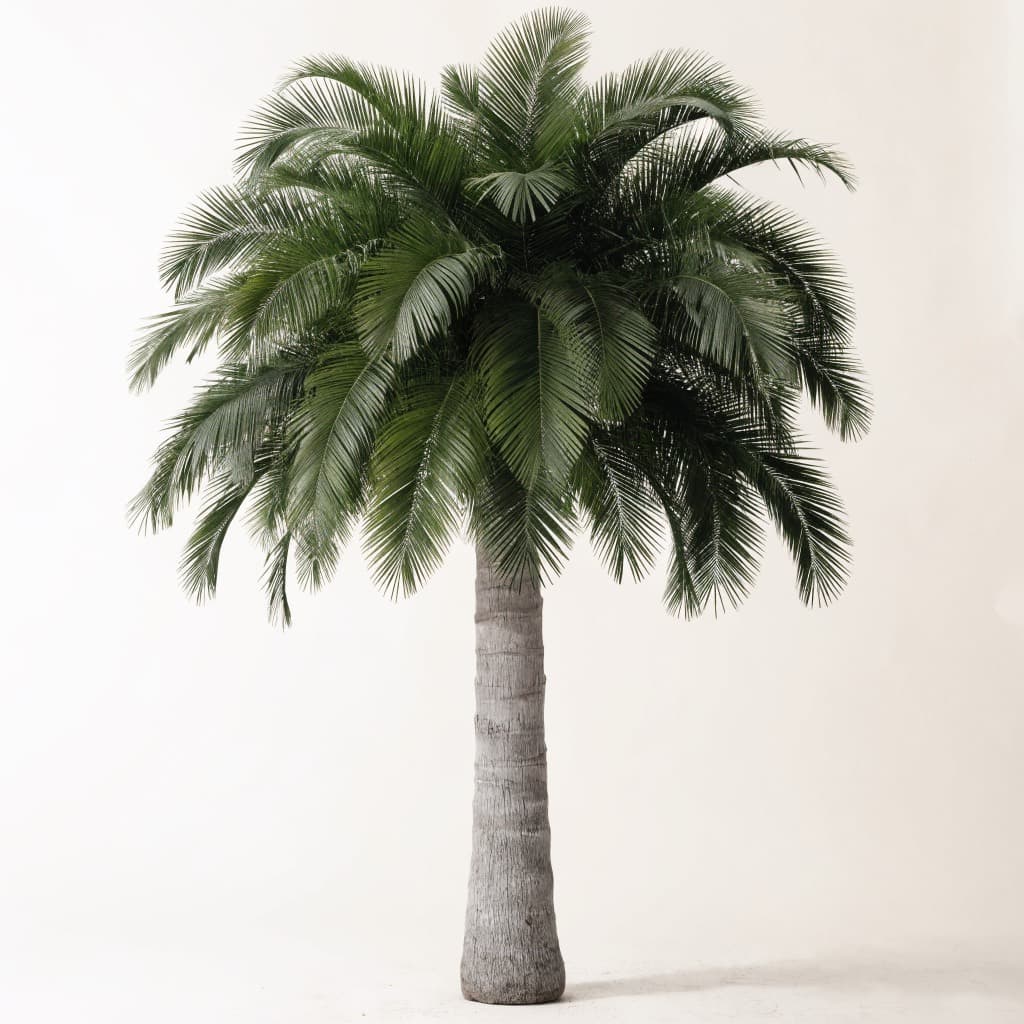
The date palm (Phoenix dactylifera) is the tree of the UAE's oases and its traditional fruit tree. It is also the main target of red palm weevil, and it sheds fruit and fibre that end up in pool filters. For gardens, the choice is usually one of these. Spacing, feeding and yellow fronds are covered in our palm trees guide.
- Foxtail palm: self-cleaning, so old fronds drop on their own. Grows to about 10 metres; the tidiest specimen palm beside a pool.
- Dwarf date palm (Phoenix roebelenii): a different, much smaller species that stays around 3 metres. Suits a courtyard or a large balcony.
- Mediterranean fan palm (Chamaerops humilis): the most drought-tolerant palm we sell, and it clumps to 2–3 metres instead of growing tall.
- Outdoor areca palm: the pet-safe screening palm, but for shade only. Full summer sun yellows and crisps the fronds within weeks.
Shrubs that do well in the UAE
Shrubs do most of the work in a UAE garden: screening, colour and the layer under the trees. These are the ones that survive a summer without constant rescue. The hedging picks are ranked in the best hedge plants for the UAE.
- Dodonaea (hopbush): closes into a 2-metre screen faster than almost anything that survives an unshaded summer, on less water than ficus. See the dodonaea hedge care guide.
- Clerodendrum inerme: the hedge for salt spray and brackish or TSE irrigation, where ficus browns off.
- Carissa (Natal plum): thorny, drought-tolerant and scented, with edible ripe plums, for a boundary that also has a security job.
- Cape honeysuckle (Tecoma capensis): a sprawling orange-flowered shrub for an informal flowering hedge.
- Crape jasmine: white flowers nearly all year on part sun, for very little care.
- Bougainvillea: flowers hardest when it is kept lean and slightly dry; feed it well and you get green growth instead.
What to avoid, and why
Most failed UAE tree plantings come down to one of four mistakes, and every one of them is avoidable at the nursery.
- Trees that need a winter chill. Jacaranda and cherry blossom grow here but do not flower reliably, because UAE lowland winters never get cold enough.
- Big surface roots next to structures. Flame tree, ficus, neem and conocarpus lift paving and crack walls if planted too close; the rule is in how far from a wall to plant a tree.
- Toxic plants in family gardens. Yellow oleander seeds are potentially fatal to children and pets, sago palm is dangerous to dogs, and common oleander belongs on boundaries only. Our pet-safe outdoor planting guide covers the swaps.
- Thirsty tropicals in the wind. Traveller's palm and other big-leaved tropicals need constant water and shelter; Gulf wind shreds them.
A little more clarity
Common questions.
What is the national tree of the UAE?
The ghaf (Prosopis cineraria). It is an evergreen desert tree whose deep taproot reaches groundwater, which is how it stays green through a UAE summer. It is protected in the wild and was the symbol of the UAE's Year of Tolerance in 2019. Planting a nursery-grown ghaf in a garden is encouraged.
Which trees need the least water in the UAE?
The natives: ghaf, sidr and samr need little or no irrigation once established, because their roots find groundwater. Among adapted trees, neem, the Mediterranean fan palm, pomegranate and olive are the most drought-tolerant. All of them need deep watering while they establish.
Is damas (conocarpus) a native UAE tree?
No. Conocarpus lancifolius is not one of the UAE's native desert trees; it was planted widely because it grows fast and shrugs off salt, heat and wind. It works as a screen or clipped ball, but its vigorous roots mean it should be kept well away from buildings, pools and pipes.
Which trees damage paving and walls in UAE gardens?
Flame tree, ficus, neem and conocarpus all run wide, shallow surface roots and need at least 4 metres of clearance from slabs, walls and drainage. Tabebuia, bauhinia and frangipani are much better behaved and can sit 2–3 metres from hard landscaping.
What shrubs grow well in the UAE heat?
Dodonaea, clerodendrum inerme, carissa, Cape honeysuckle, crape jasmine and bougainvillea all get through a UAE summer on moderate water. Clerodendrum is the one for salt spray and TSE irrigation; dodonaea is the fastest low-water screen in full sun.