The Ghaf (Prosopis cineraria) is the national tree of the UAE: an evergreen desert tree that stays green through a summer in which almost nothing else does, because its taproot reaches groundwater tens of metres down. It is protected, it is slow, and in a garden it asks for almost nothing once established — which is exactly why it belongs in more UAE gardens than it is planted in.
Why the Ghaf is the national tree
Prosopis cineraria was named the national tree of the UAE because it is the tree the country's inland life was organised around. Ghaf groves marked where water was reachable, provided the only meaningful shade in open desert, fed livestock through the dry season with their leaves and pods, and were the traditional gathering point for a community — a role formally echoed when the tree was made the symbol of the UAE's Year of Tolerance in 2019.
It is also genuinely remarkable as a plant. The Ghaf stays evergreen through a UAE summer, drops almost nothing, and survives on rainfall that would kill nearly any ornamental tree, all because of a root system that sends a taproot straight down to groundwater while the surface stays bone dry. In desert ecology terms it is a keystone: the shade and leaf litter under a mature Ghaf support a whole set of plants and animals that cannot survive in open sun.
What it looks like and how fast it grows
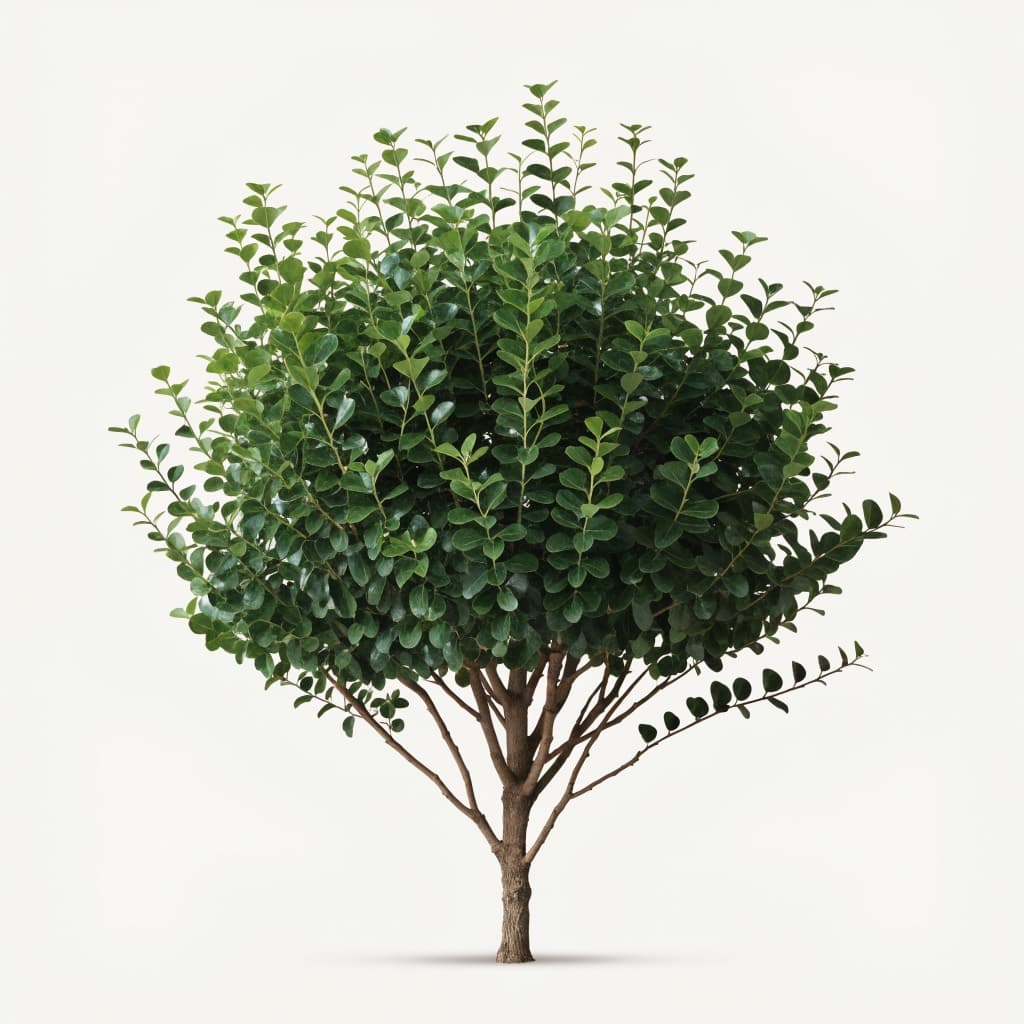
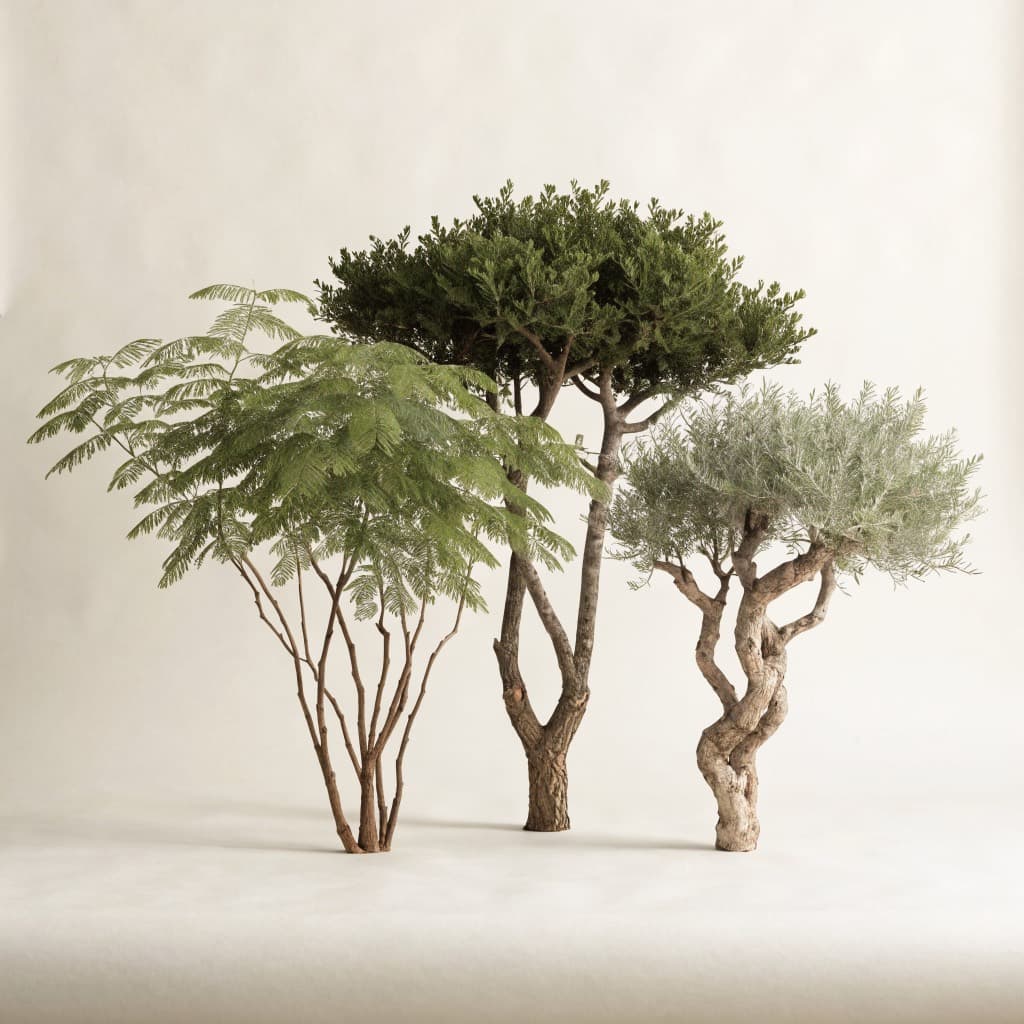
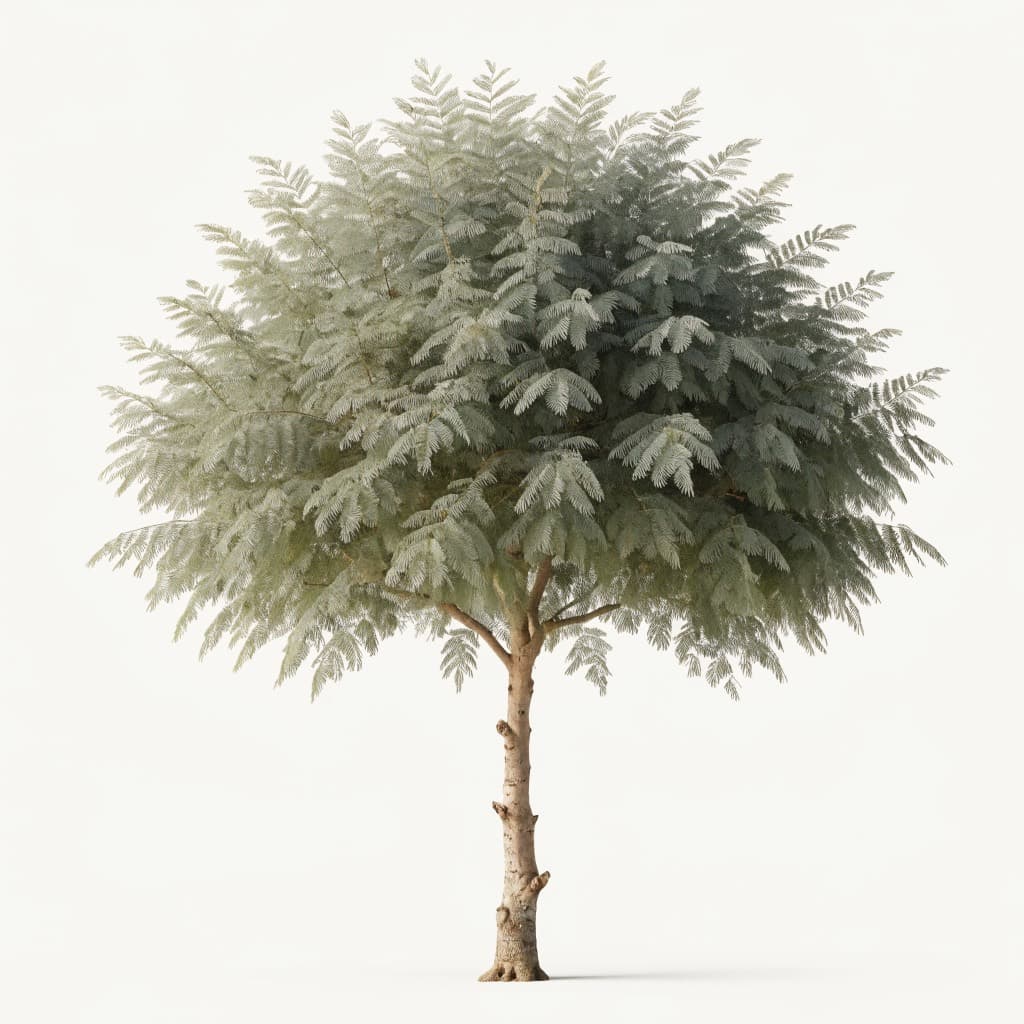
A mature Ghaf is a spreading, open-canopied tree, typically reaching somewhere between 6 and 10 metres in cultivation, with small grey-green compound leaves, thorny branches when young, and long seed pods. The canopy casts a dappled shade rather than a dense one, which is why grass and ground cover survive under it where they would fail under a dense evergreen.
It is slow. A Ghaf is not the tree to plant if you want shade over a seating area in two summers — that is a job for a faster species. What you are planting is a tree that will be there in fifty years, needing nothing, while the fast trees around it are being replaced. Our Ghaf tree is supplied as an established plant rather than a seedling, which takes several years off the wait.
Nitrogen fixation is the quiet bonus: like other legumes, Ghaf hosts bacteria in its roots that fix atmospheric nitrogen, which is part of why soil under a Ghaf grove is measurably better than the sand around it.
Planting and watering one in a garden
The counterintuitive part of growing a Ghaf is that you have to water it properly for the first two to three years and then stop. A young tree has not yet put its taproot down to anything useful, so it depends entirely on what you give it. Water deeply and infrequently — a long soak that drives water down, encouraging the root to follow, rather than a daily sprinkle that keeps a shallow root system near the surface.
Once established, a Ghaf in a UAE garden needs essentially no irrigation, and continuing to water it on a garden drip line is actively unhelpful: it keeps roots shallow and can cause rot. This is also the mistake that kills Ghaf trees planted in over-irrigated lawns and landscaped verges.
Give it room. Plant well away from walls, paving and pool edges — the canopy spreads and the root system is extensive even when it is going down rather than out. The general rule is in our tree planting distance guide, and the best time to plant trees and shrubs in the UAE is the cool season, October to March, so the tree establishes before its first summer.
Legal protection: check before you cut anything
Ghaf trees are protected in the UAE. Wild Ghaf in particular cannot simply be cleared, cut or transplanted at will — removal or major works on established trees are matters for the relevant municipality or environment authority, and the exact rules and permit routes differ by emirate.
Practically, that means two things for a homeowner. If there is an existing Ghaf on your plot, contact your municipality before doing anything structural to it, including heavy pruning, moving it or building near the root zone. And if you are buying one, buy a nursery-propagated tree from a seller who can say where it came from — a mature Ghaf offered cheaply from an unclear source is not a bargain worth taking on.
Planting a native garden around it
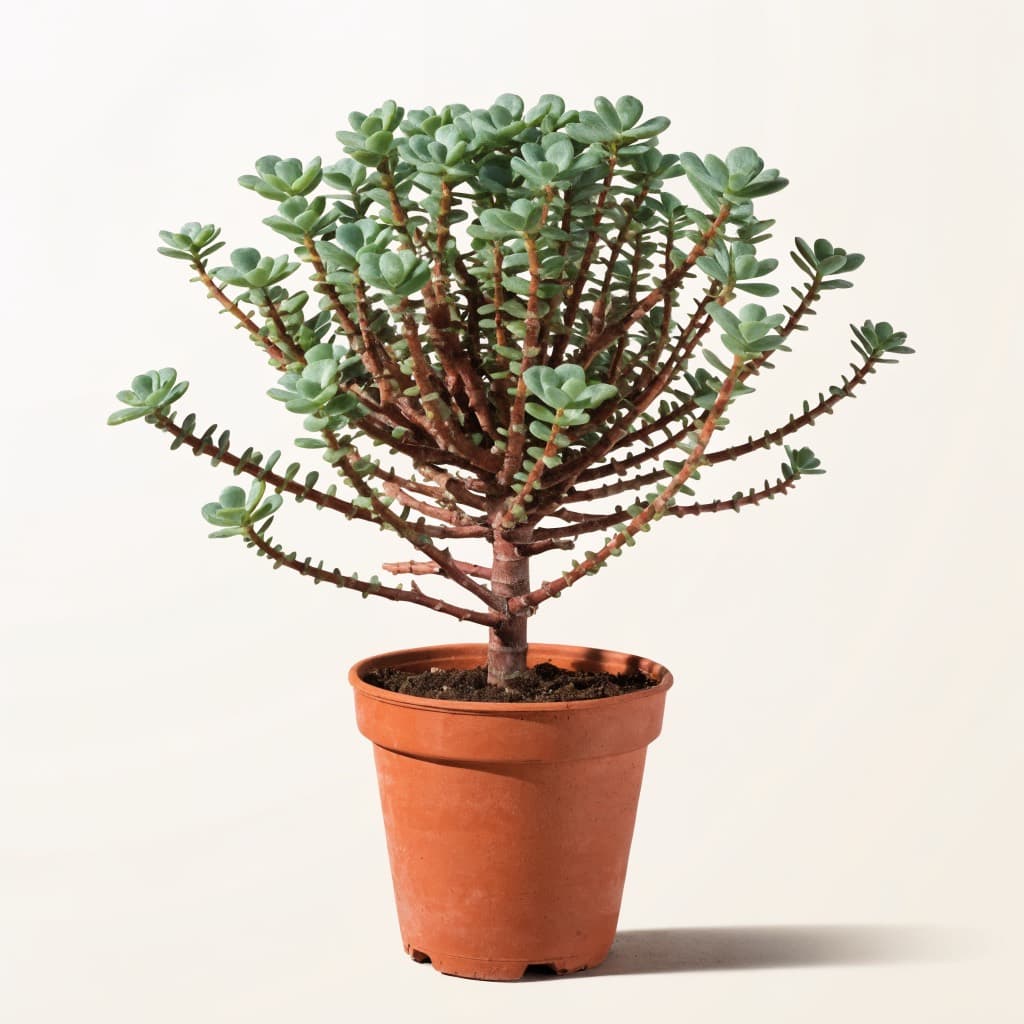
A Ghaf works best with company that shares its habits. The Sidr tree (Ziziphus spina-christi) is the obvious partner — another protected, deep-rooted native, the source of Sidr honey, and equally happy on very little water. Below them, desert-adapted shrubs and ground cover finish the planting without adding an irrigation burden: elephant bush, agave, and the trays in our ground cover range.
The whole approach is worth taking seriously beyond the symbolism. A native planting in the UAE uses a fraction of the water of a conventional ornamental garden, survives a summer without intervention, and needs almost no replacement planting. We group the plants for it in the UAE native collection and the UAE native set, and the wider selection logic is in our guide to the best UAE native plants. For how the ghaf compares with the adapted shade, flowering and fruit trees planted here, see trees that grow in the UAE.
A little more clarity
Common questions.
How deep do Ghaf tree roots go?
Very deep — Prosopis cineraria is known for a taproot that pursues groundwater far below the surface, which is how the tree stays evergreen through a desert summer with no rainfall. That is also why an established Ghaf needs no irrigation, and why watering one on a shallow garden drip keeps its roots in the wrong place.
Can I plant a Ghaf tree in my garden in the UAE?
Yes — planting a nursery-grown Ghaf is encouraged, and it is one of the lowest-maintenance trees available here. The protection applies to cutting, clearing or removing established and wild trees rather than to planting new ones. Check with your municipality before removing or heavily pruning an existing tree on your plot.
How long does a Ghaf tree take to grow?
Slowly, and that is the trade-off. Expect years rather than seasons to reach useful shade size, which is why buying an established tree rather than a seedling makes a real difference. In exchange you get a tree that needs no irrigation once settled and can outlive every other planting in the garden.
What is the difference between a Ghaf tree and a Sidr tree?
Both are protected UAE natives that survive on groundwater, but the Ghaf is an evergreen legume with small grey-green compound leaves and a light, spreading canopy, while the Sidr (Ziziphus spina-christi) has broader glossy leaves, small edible fruit, and is the source of Sidr honey. Ghaf gives dappled shade; Sidr gives denser shade and a crop.