The flowering tree that suits your UAE garden is decided by three things: which month it flowers, how big it finally gets, and whether its roots will lift your driveway. Flame tree for open ground and summer scarlet; bauhinia for a normal villa plot and winter colour; tabebuia wherever the tree sits near paving.
Start with the flowering month, not the photograph
A UAE garden is used heavily from October to April and barely at all in July. A tree that flowers spectacularly in June is magnificent in photographs taken from an air-conditioned room, and largely wasted in practice.
Bauhinia flowers November to March. Tecoma stans carries yellow trumpets from October. Tabebuia gives a three to four week pink event in spring. Flame tree and peltophorum are summer trees. Decide which months you want colour before you decide which tree you like the look of.
Then check what the roots will do
Root damage to UAE hard landscaping is a planting-distance mistake made years earlier, and it is expensive to put right. Flame tree, ficus, neem and conocarpus all run wide shallow surface roots and need at least 4 metres of clearance from slabs, walls and drainage.
Tabebuia, bauhinia and frangipani are far better behaved and can go 2–3 metres from hard landscaping. There is a reason municipalities line paved boulevards with tabebuia rather than flame trees.
The five trees that actually perform here
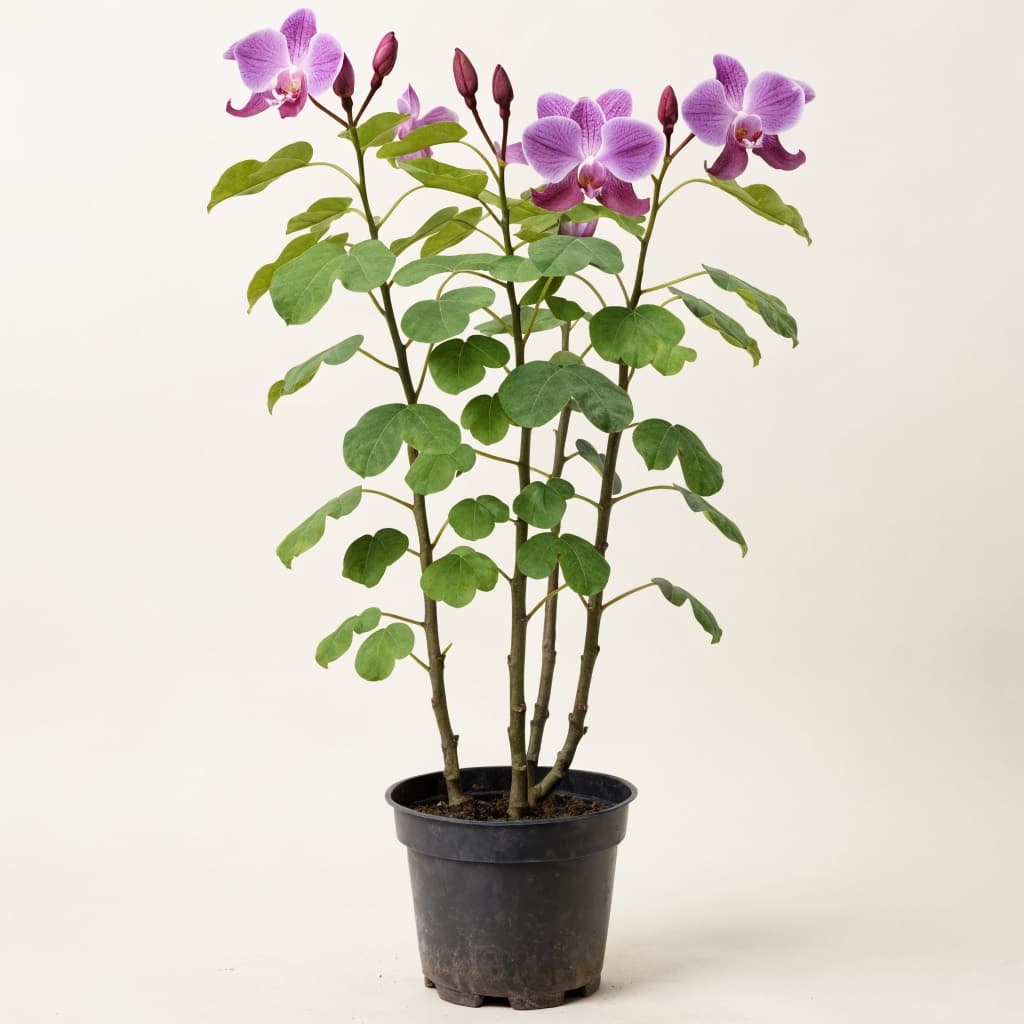
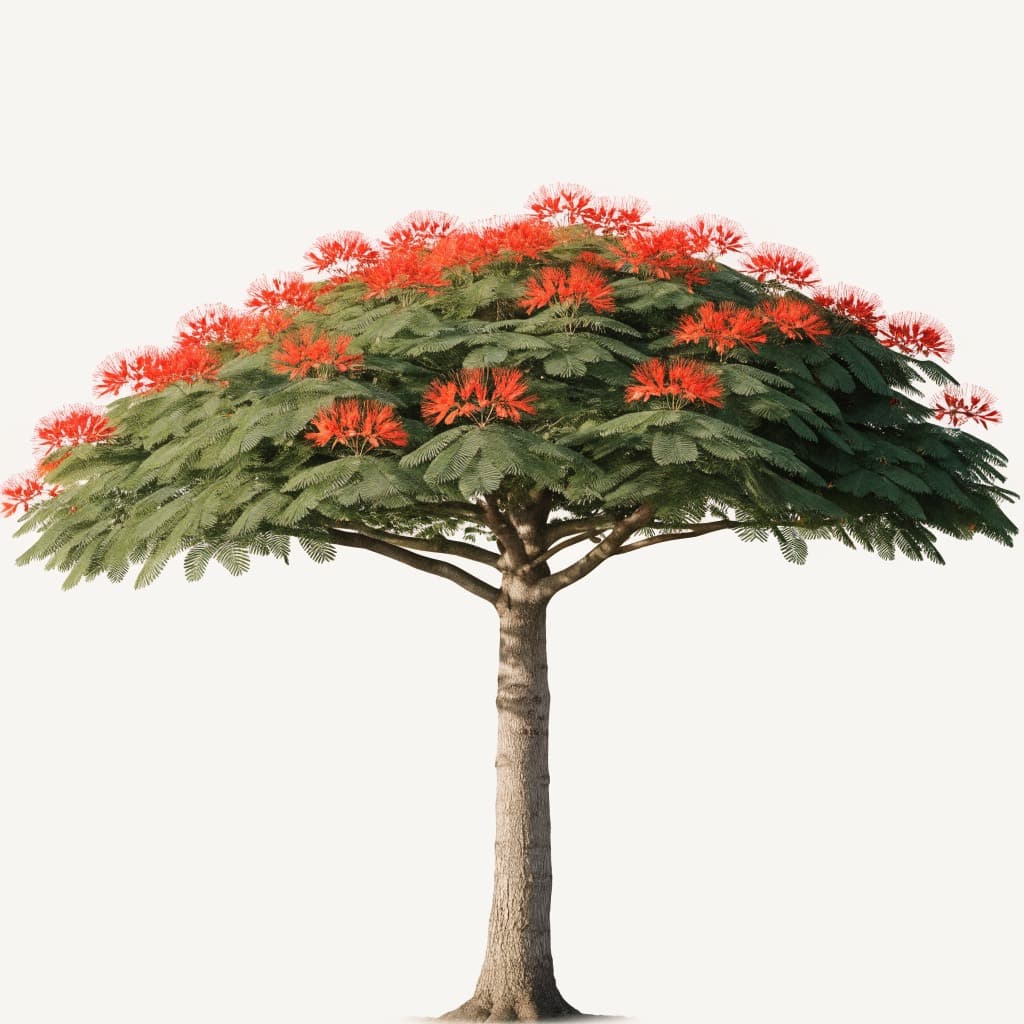
Flame tree (Delonix regia) — scarlet, May to July, wide shade canopy, needs open ground; its roots and watering are covered in the flame tree care guide. Hong Kong orchid tree (Bauhinia) — mauve, November to March, stops near 6m, the best all-round choice for a normal villa plot.
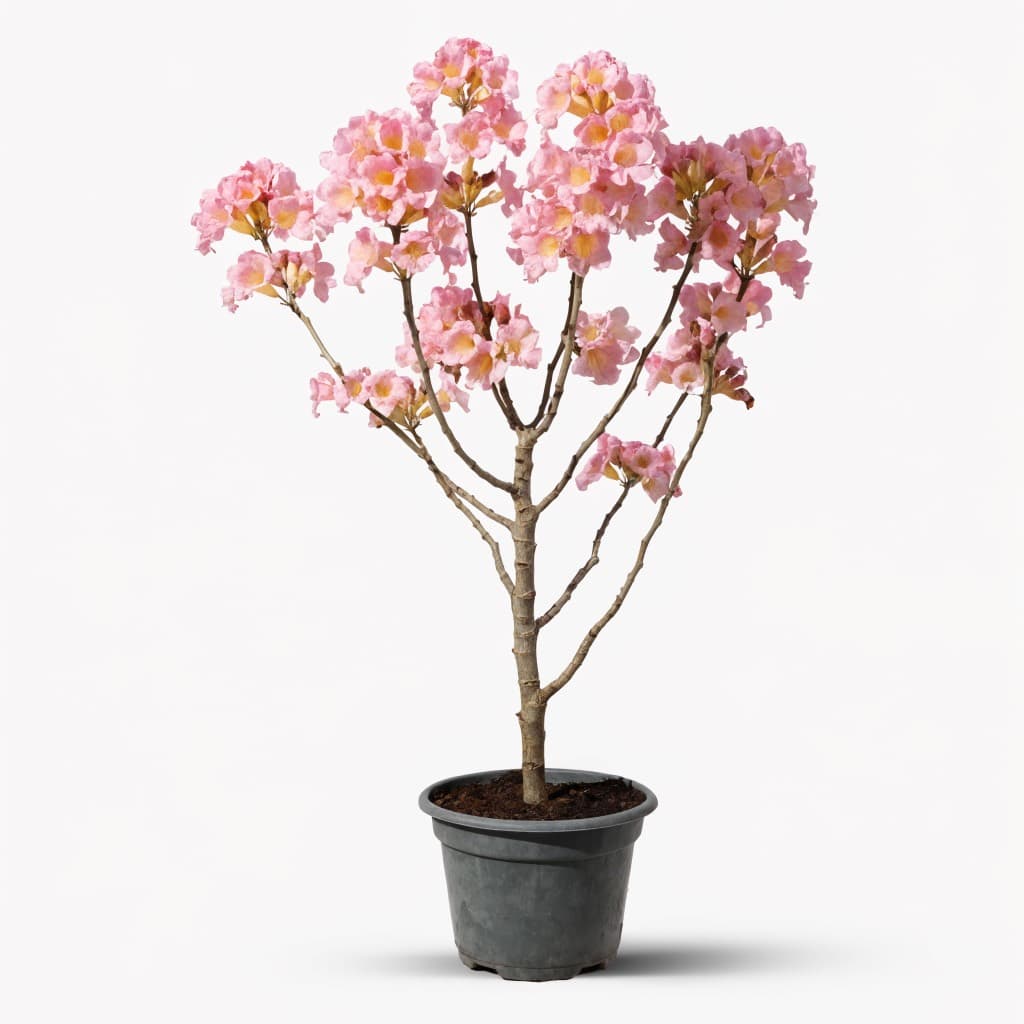
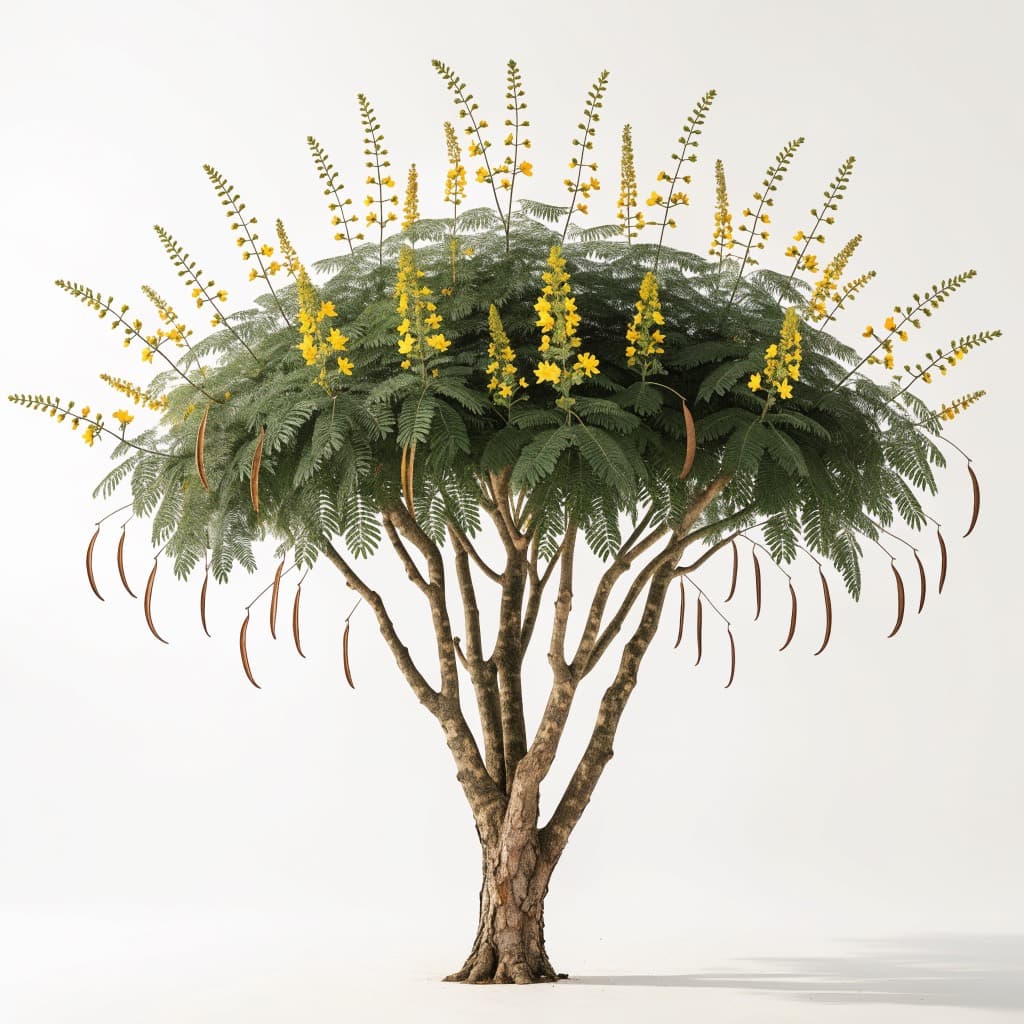
Tabebuia — pink on bare branches in spring, safe near paving, light shade only. Cassia (golden shower) — hanging yellow chains in late spring, widens before it heightens. Peltophorum (copperpod) — yellow with genuine summer shade and coastal salt tolerance.
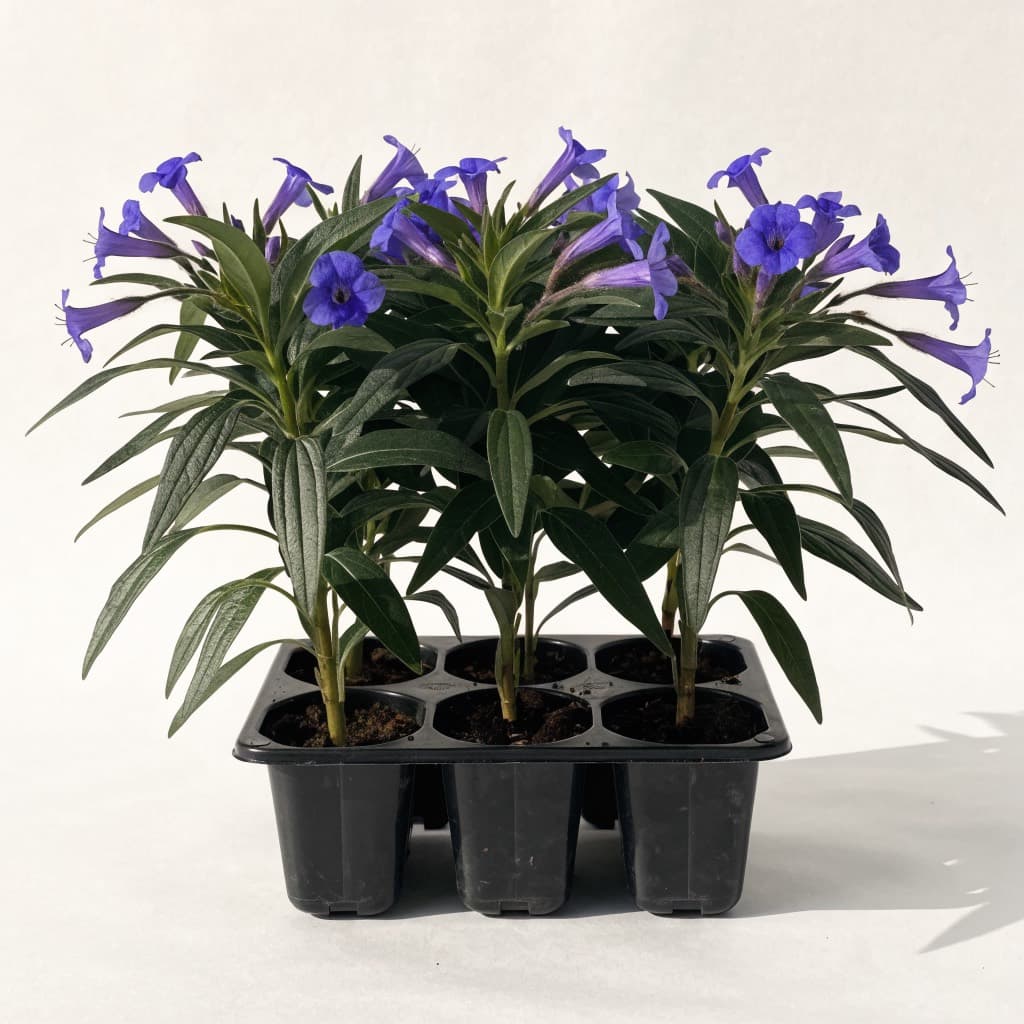
Tecoma stans is the honourable mention: at 3–5m it is technically a large shrub trained as a small tree, and it is the fastest of the group to first flowering — often in its first season.
Two trees people ask for that do not work here
Jacaranda is the most requested flowering tree in UAE garden conversations, and it needs a genuine winter chill to flower reliably. In the UAE lowlands it does not get one. You end up with a healthy green tree and almost no purple, which is not what anyone is paying for.
Cherry blossom is the same story in stronger terms: it requires hundreds of winter chill hours the climate simply does not supply, and no cultivar changes that. We would rather say this plainly than sell a tree that will disappoint for a decade.
Planting and the first year
Plant October to March. Water deeply twice weekly through the first summer — deeply being the operative word, since frequent shallow watering keeps roots at the surface, which is precisely the habit that cracks paving later.
At the 30–50 litre grades, expect first flowering in the second season for flame, tabebuia and bauhinia, and often the first season for tecoma and cassia. Feed balanced granular fertiliser in October and March, never in peak summer.
If you are still choosing between a flowering tree and a shade, fruit or native tree, our overview of trees that grow in the UAE compares every group on heat, salt and water.
A little more clarity
Common questions.
Which flowering tree gives the most shade in the UAE?
Peltophorum, followed by the flame tree. Peltophorum holds its dense fern-like canopy through a Gulf summer and tolerates coastal salt wind, which makes it the more reliable shade tree of the two where roots near paving are a concern.
Can flowering trees be grown in large pots in the UAE?
Tecoma stans and frangipani work well in large pots on a terrace. Flame tree, tabebuia and peltophorum do not — they survive but will not flower properly until they are in open ground with room for their roots to run.
How much water does an established flowering tree need in Dubai?
Far less than people assume. After the first year, most of these trees are comfortable on a weekly deep soak in summer and fortnightly in winter. Over-irrigation produces lush green growth at the expense of flowers, and keeps roots shallow.