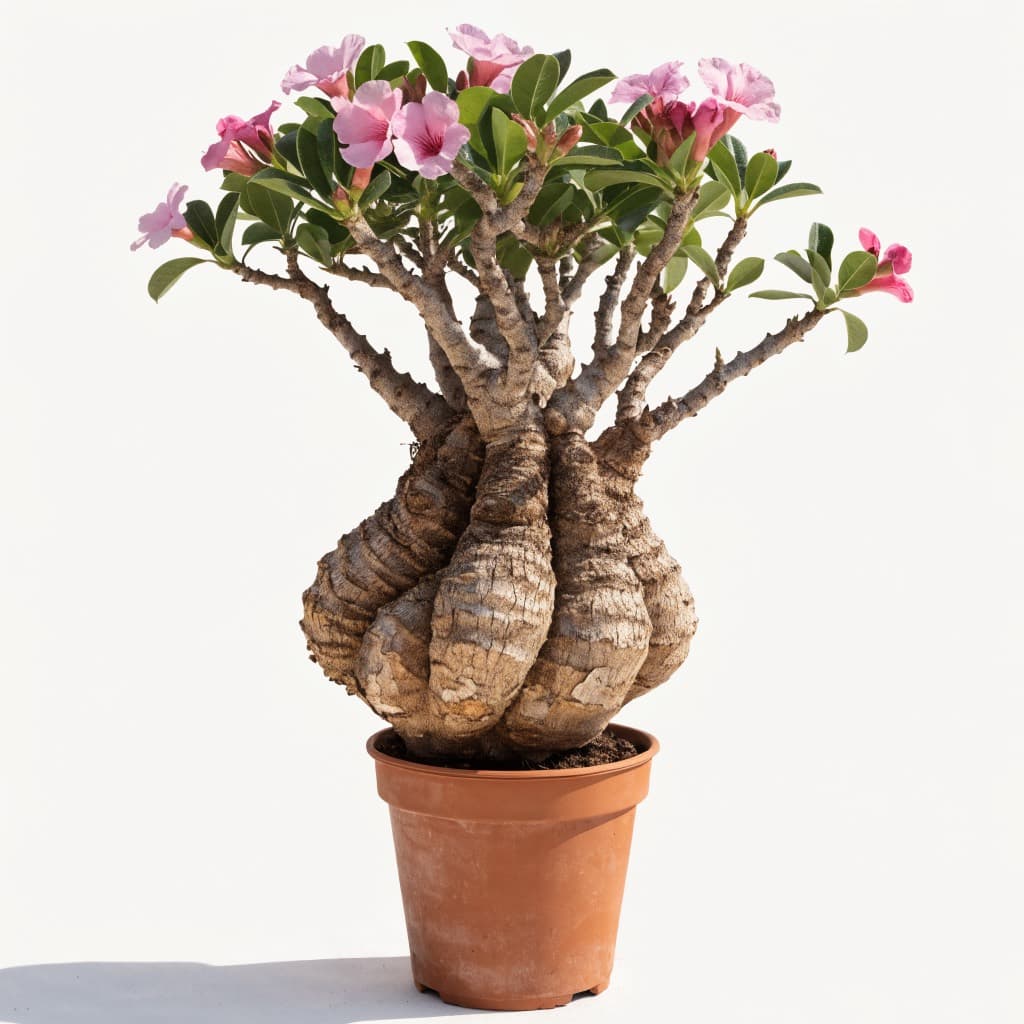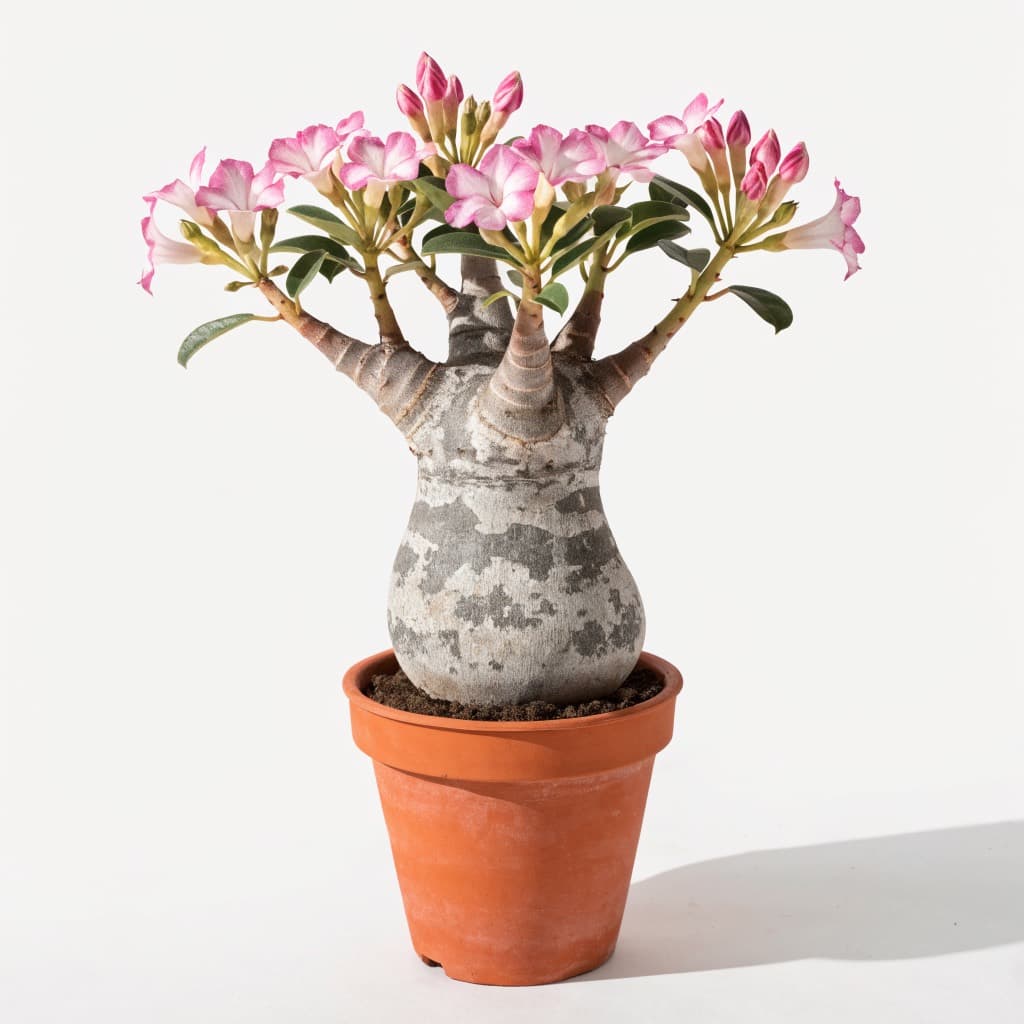
Desert rose (Adenium obesum) is a swollen-stemmed succulent from the Arabian Peninsula and East Africa that flowers hardest in the months when everything else in a UAE garden is suffering. It wants full sun, gritty soil, and far less water than it looks like it should need. The two mistakes that kill it here are a pot with no drainage and winter watering. Everything else is detail.
Why desert rose suits the UAE better than almost anything else
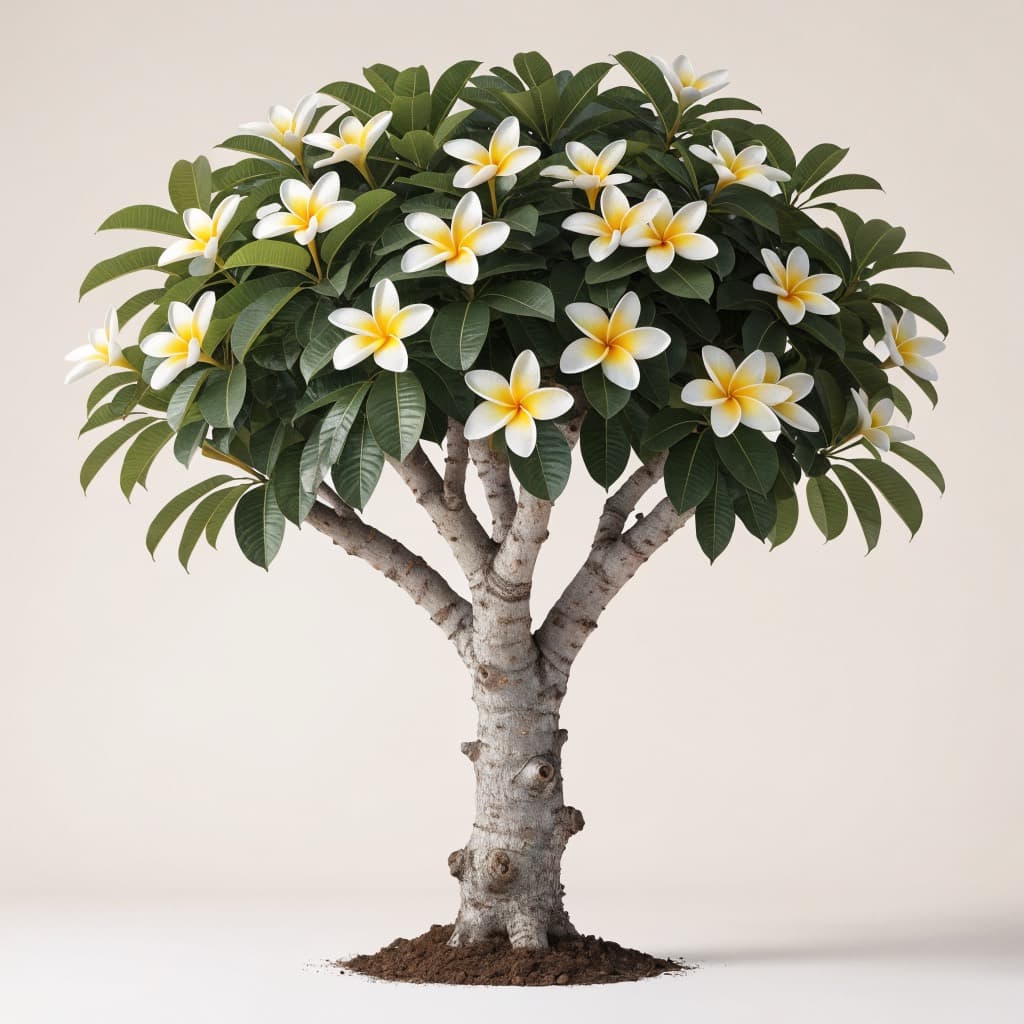
Adenium obesum is native to the Arabian Peninsula, the Sahel and East Africa. It is not a rose and not a cactus — it is a succulent member of the Apocynaceae family, the same family as frangipani and String of Hearts, and it stores water in a swollen stem base called a caudex. That caudex is the whole design: it lets the plant run on stored water through a drought and then push out trumpet flowers in pink, red, white or bicolour when conditions allow.
In practice that means a plant that flowers in May, June and July on a Dubai balcony where petunias have already died. It is one of a small group — alongside bougainvillea, frangipani and desert-adapted shrubs — that treats a UAE summer as its season rather than something to survive. If your outdoor space is a full-sun terrace that bakes from ten in the morning, this is close to the ideal pot plant. Browse the rest of the group in the desert and succulent collection.
Watering: the only thing most people get wrong
Desert rose is killed by water far more often than by heat. The rule that works here is simple: water thoroughly, then do nothing until the soil is bone dry and the caudex feels slightly less firm. In peak summer on a hot terrace that can be every three or four days. In December and January, when the plant slows and may drop leaves, it can be every three or four weeks — and a plant kept in a shaded spot over winter may need almost nothing at all.
Root rot in a desert rose is quiet until it is not. The first sign is a caudex that feels soft or spongy rather than firm, or yellowing leaves while the soil is still damp. By the time the stem darkens at the base the plant is usually gone. Prevention is entirely mechanical: a pot with a real drainage hole, a gritty mix, and no saucer left standing with water in it.
- Soil: a cactus or succulent mix, or standard potting soil cut roughly half and half with coarse sand or perlite.
- Pot: terracotta or unglazed ceramic beats plastic here, because it dries the rootball faster. Drainage hole is non-negotiable.
- Winter: reduce watering sharply from late November. Leaf drop in the cool months is dormancy, not a problem to fix with more water.
- Never let the caudex sit in wet soil or gravel that stays damp after irrigation.
Light, feeding and getting more flowers
Adenium needs direct sun — five to six hours minimum, and it will happily take a full UAE day of it. A desert rose that stops flowering is almost always a desert rose that has been moved somewhere polite and shaded. It is not a houseplant: kept indoors in an air-conditioned room it stretches, stops budding and eventually declines.
Feed lightly during the warm growing season with a balanced or low-nitrogen fertiliser. Too much nitrogen gives you a leafy plant with few flowers, which is the same failure mode as an over-fed bougainvillea. Our outdoor plant food at half the labelled rate, once a month from March to October, is enough. Stop feeding entirely over winter.
Pruning is how you get a fuller plant. Cutting a branch tip forces two or three new shoots, and flowers form on new growth, so a light prune in late February or early March pays back in flowers by May. Cut with clean secateurs, and expect the plant to weep white sap for a minute or two.
Grafted or seed-grown, and what to check before buying
Two kinds of desert rose are sold in the UAE. Seed-grown plants develop the fat, sculptural caudex that collectors want, but flower colour is a lottery until the plant blooms. Grafted plants carry a named flower type — doubles, deep reds, picotee edges — on a seedling rootstock, so you know exactly what you are getting, but the caudex is usually less dramatic and there is a visible graft line on the stem.
Whichever you buy, check three things: the caudex should be firm all over with no soft patches or dark weeping spots; the branch tips should be plump rather than shrivelled; and the soil should be gritty, not a dense wet peat block. A plant that arrives in heavy nursery peat should be repotted into a free-draining mix within its first month here.
We deliver the Desert Rose (Adenium) at AED 119 and a larger specimen plant at AED 349 for people who want the thick trunk immediately rather than in five years. Both go out with same-day delivery in Dubai on orders before 1pm.
Pet safety and handling
This is the one real caution. Every part of a desert rose is toxic if eaten, and the milky sap contains cardiac glycosides — the plant has historically been used as an arrow poison in parts of Africa. It is not a plant for a home where a dog chews everything or a toddler grazes on foliage, and it should not go on a floor-level pot in a pet household.
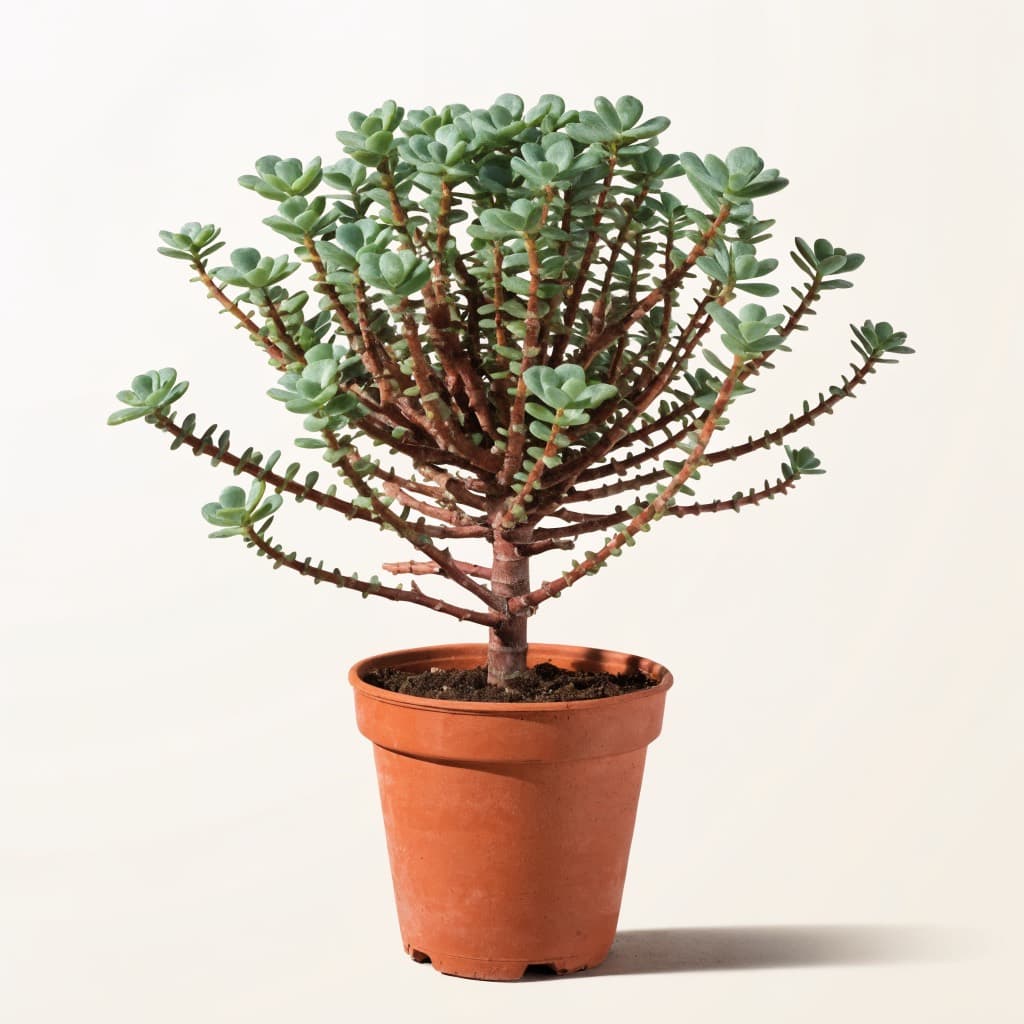
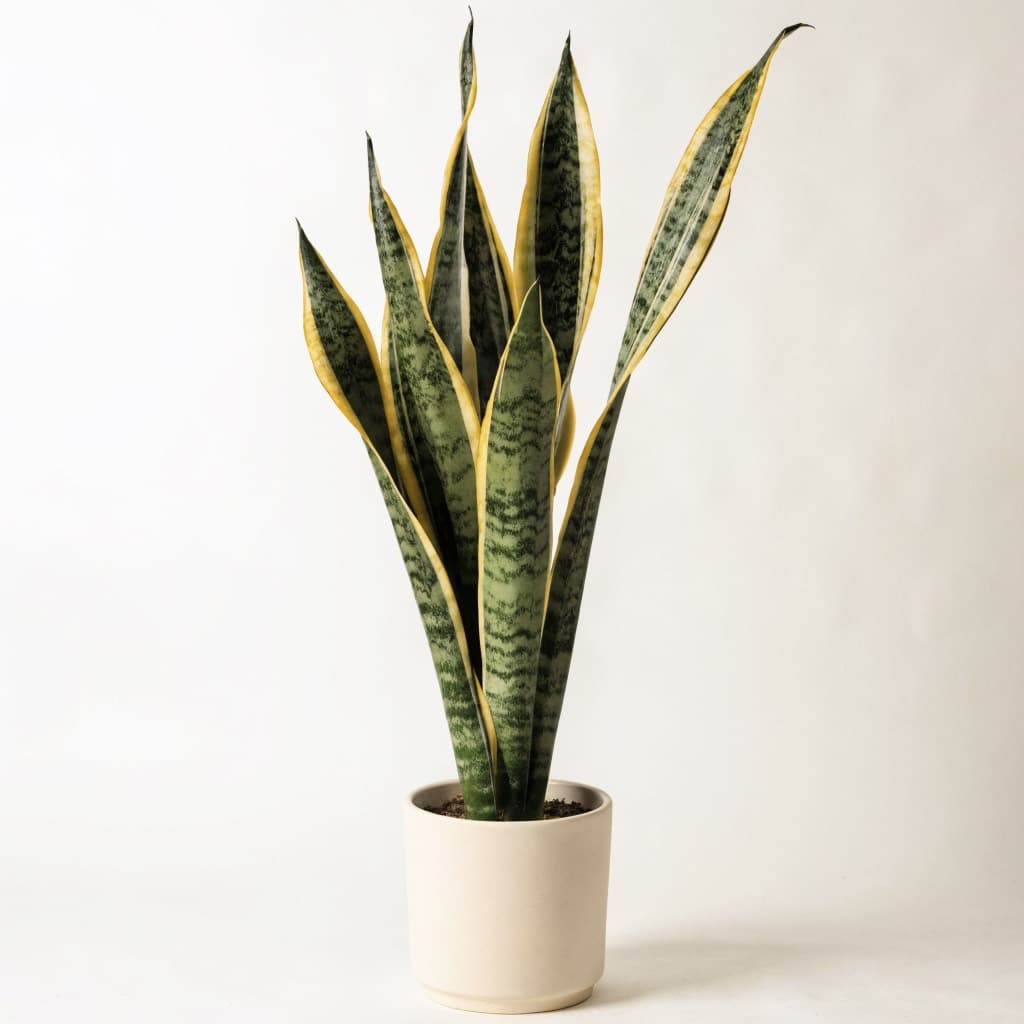
For everyone else the practical measures are small: wash your hands after pruning, keep the sap away from your eyes, and site the plant on a stand, a wall or a rail rather than at nose height for a curious animal. If you want the same sculptural, sun-loving look with nothing toxic in it, elephant bush and the plants in our pet-safe range are the alternatives.
A little more clarity
Common questions.
Why is my desert rose dropping leaves in winter?
That is normal dormancy. Adenium slows down when nights cool and day length shortens, and many plants shed most or all of their leaves between December and February. The correct response is less water, not more — a leafless plant is barely transpiring, so winter watering at summer frequency is what causes rot. Leaves return on their own as temperatures rise.
How do I get a thicker caudex on a desert rose?
Time, sun and a slightly tight pot. Caudex thickness comes from a seed-grown plant maturing in strong light with regular dry-wet cycles; it cannot be forced with fertiliser. Some growers lift the plant slightly at each repot so more of the root mass sits above soil level, which exposes and thickens the base over years.
Can a desert rose grow indoors in Dubai?
Not well. It needs several hours of direct sun to flower and to keep its compact shape, and indoor light behind tinted UAE glazing is rarely enough. Kept inside it stretches, stops budding and becomes vulnerable to rot because the soil dries so slowly in air conditioning. Treat it as a balcony, terrace or garden plant.
Is desert rose sap dangerous to touch?
The sap is an irritant rather than a contact poison. Brief skin contact while pruning is not dangerous for most people, but wash it off, keep it away from eyes and broken skin, and wear gloves if you have sensitive skin. The serious risk is ingestion, which is why the plant does not belong within reach of pets or small children.