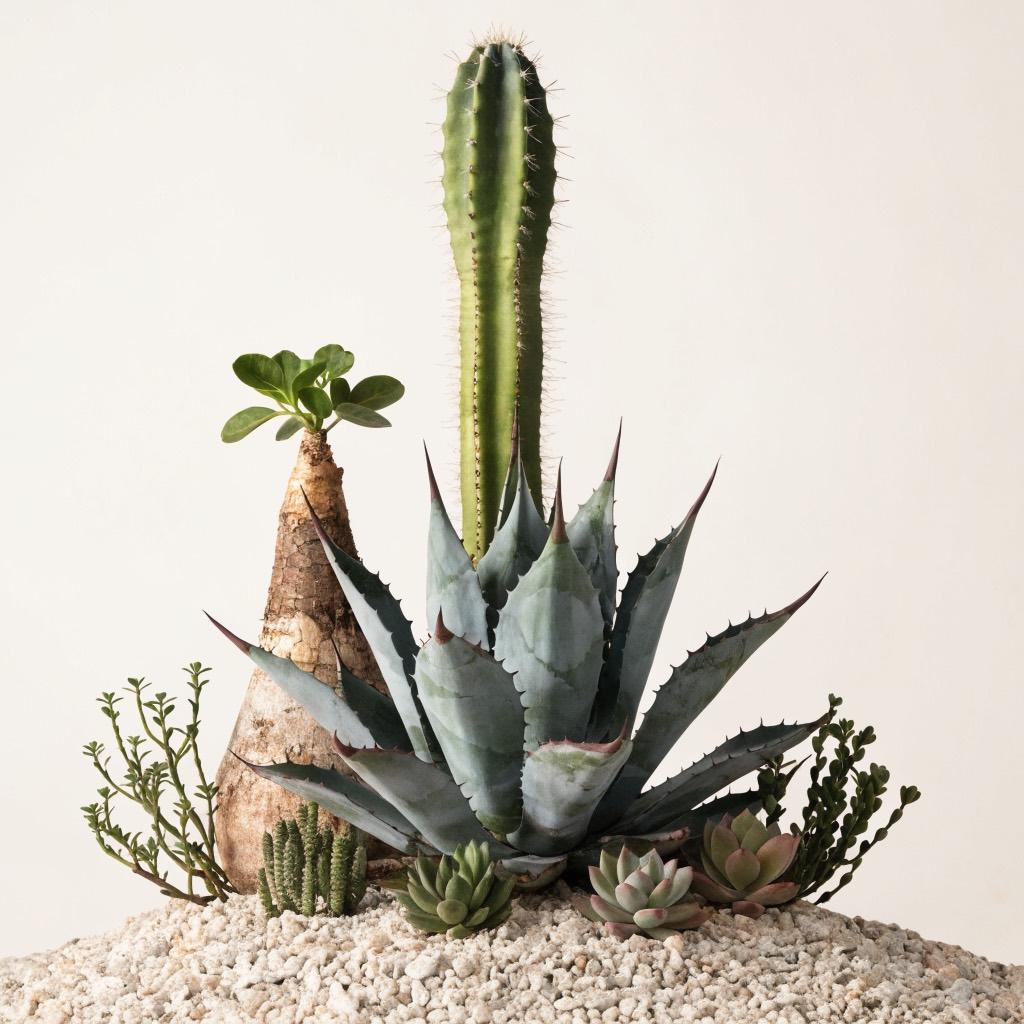
A desert-chic terrace in Dubai is a gravel garden in pots: one tall anchor such as a yucca or a euphorbia column, a middle layer of blue agave, small succulents at the front, and pale gravel over every pot to tie it together. Build it between October and March so the roots settle before the heat, use pots with a working drainage hole and a gritty mix, and water only when a pot is dry to the bottom, which from December to February means roughly every three to four weeks.
What desert-chic means, and why to build it now
Desert-chic is a look, not a native planting. The plants that make it come from other deserts: agave and echeveria from Mexico, Yucca rostrata from the Chihuahuan Desert of Texas and northern Mexico, and the euphorbia columns from Africa. They read well against the pale render, stone cladding and sand-coloured tiles of most Dubai terraces. The one Arabian plant in the usual mix is the desert rose. If you want a garden of genuinely native species, start with our ranking of the best UAE native plants; this page is about composing the look in pots.
October to March is the time to build it. With days in the mid-20s, roots grow into fresh mix quickly and the plants have five months to harden before the first 40°C week. Most nursery succulents are raised under shade netting, so a plant bought in May goes straight from netting into full Gulf sun, while one bought in November gets a mild winter to adjust. Once established, the scheme looks much the same in July as it does in January, which is the main reason to choose it.
Composition: one anchor, a middle layer, a low front
The schemes that look designed rather than collected follow a simple structure. Pick one tall anchor, repeat one mid-height rosette two or three times, and fill the front with small plants and gravel. Leave bare gravel between the groups. In this style the empty space is part of the design, and a terrace crowded with twelve different species reads as a nursery bench.
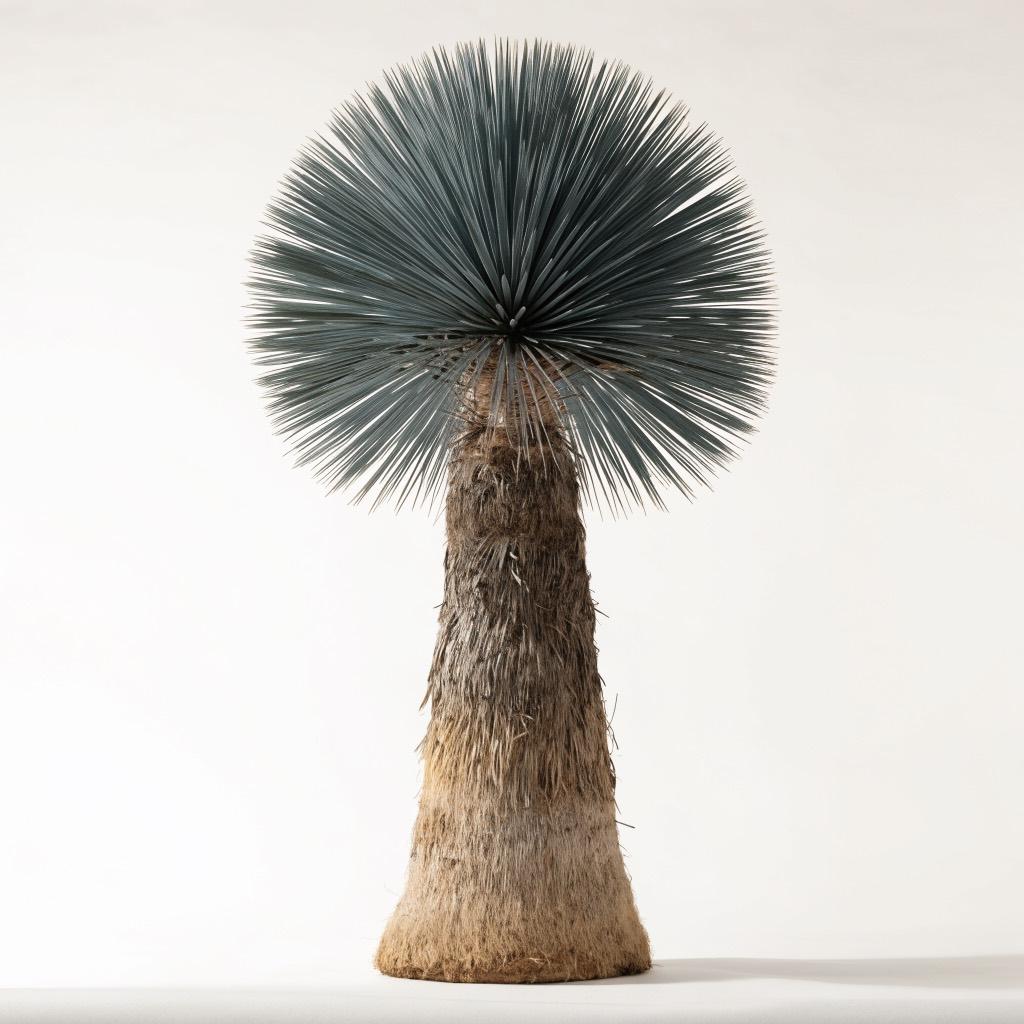
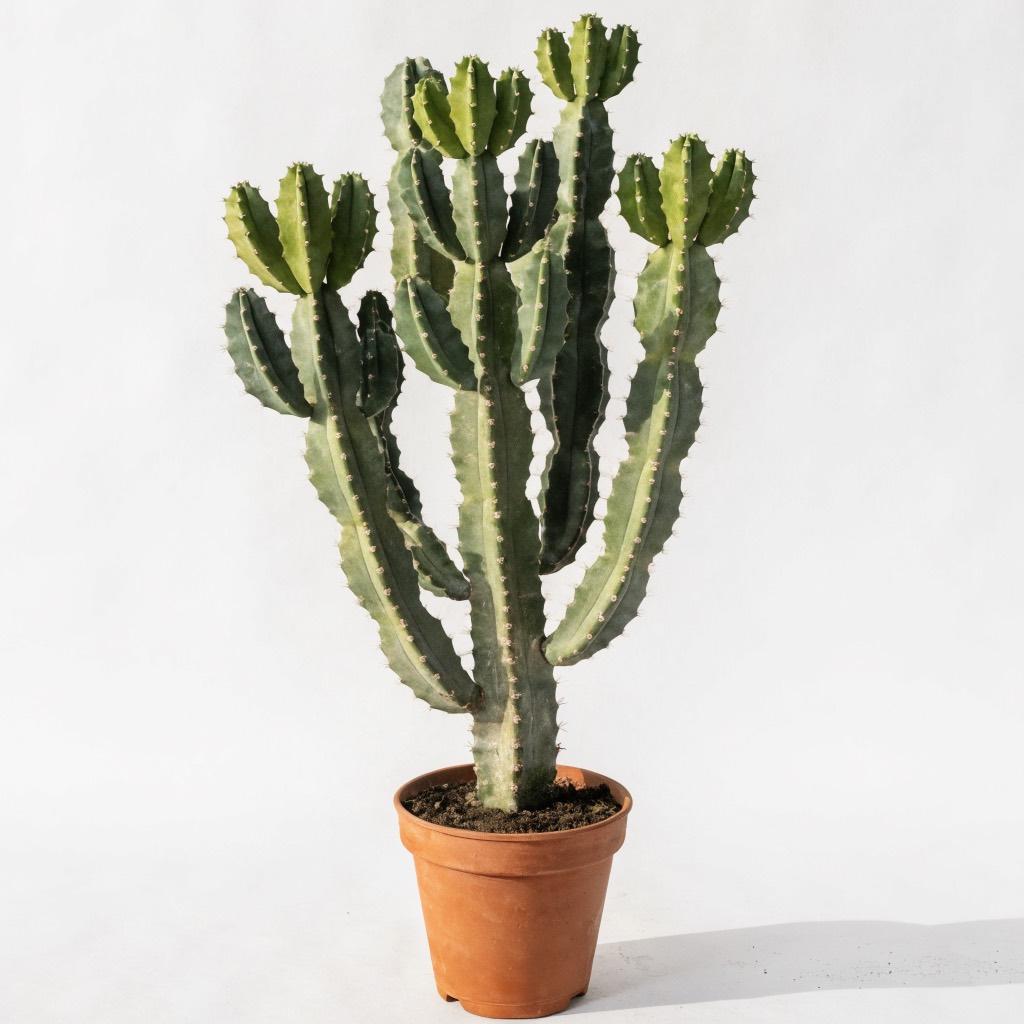
- Anchor, one plant: the Yucca rostrata (AED 649, about 1.2m in a 40cm pot) is the most architectural plant in the range, a sphere of fine blue leaves on a woody trunk that grows a few centimetres a year. For less money and a greener, more vertical line, a euphorbia column does the same job.
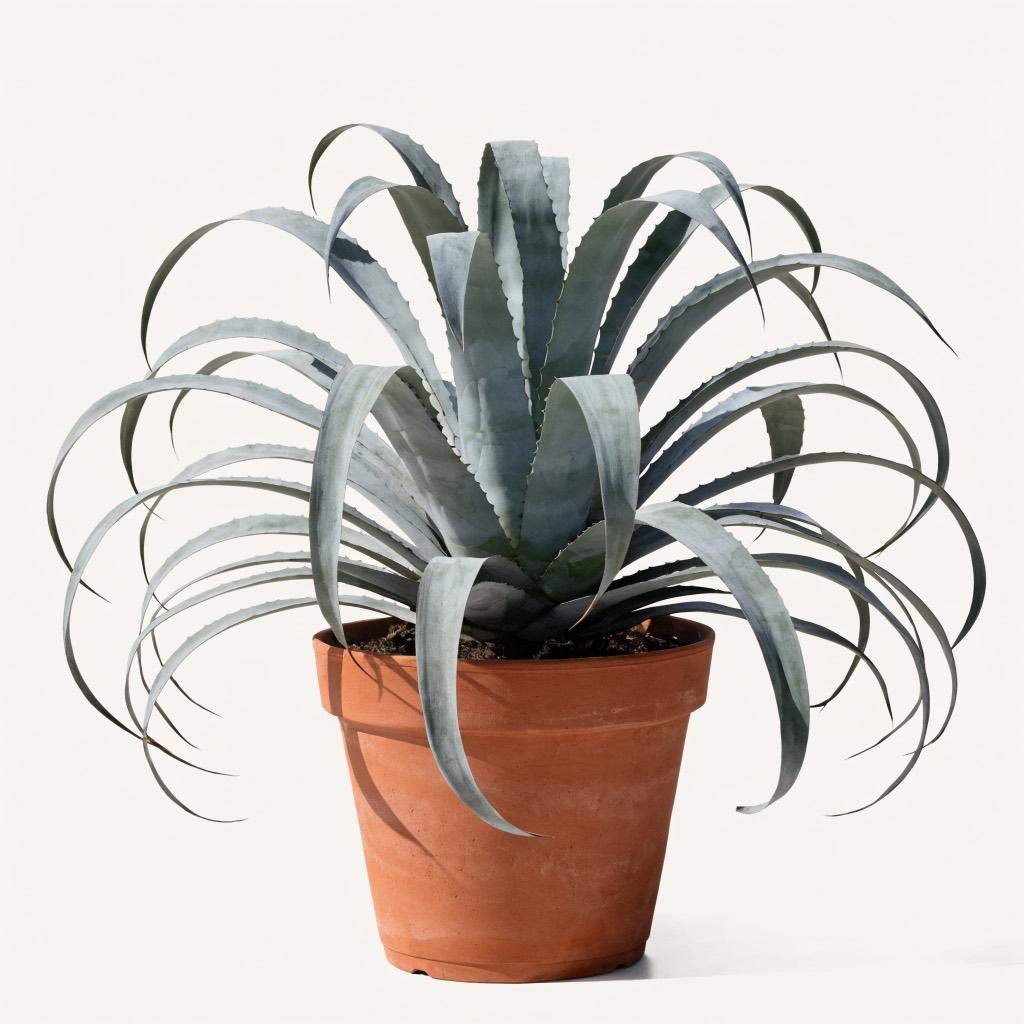
- Middle layer, two or three plants: blue agave (AED 79) forms a wide rosette in blue-grey, and Agave attenuata is one of the soft-tipped agaves. Three in matching pots along a wall make a stronger picture than three different succulents.
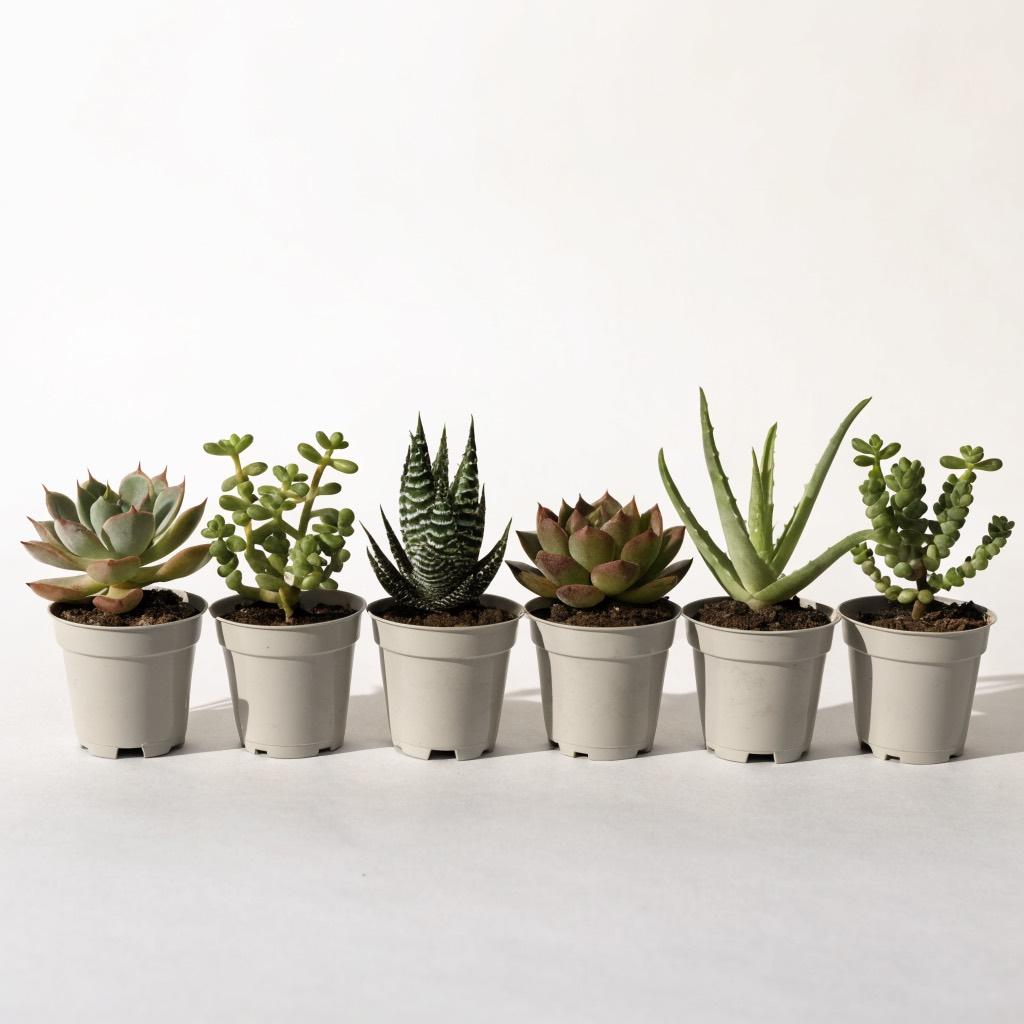
- Front and edges: a succulent six-pack of 8cm echeveria and similar plants in a shallow bowl, or a desert rose as the one flowering plant in the scheme.
- Movement: one ornamental fountain grass. Its plumes catch wind and evening light, which stops a scheme of rigid rosettes looking static.
Colour, and the set that does it in one delivery
Keep the palette narrow: blue-grey and green plants, gravel in one pale colour, and pots in sand, stone or off-white. One darker pot works as an accent; five colours of glaze fight the plants for attention. Repetition does more than variety here. Two identical pots with identical agaves either side of a door look intentional in a way that two unrelated plants never do.
The Desert Chic Set is this structure in one delivery: a blue agave, a euphorbia column, a desert rose, a succulent six-pack and 10kg of pale gravel for AED 449, against AED 512 for the same five items bought separately. Pots are not part of the set, so plan two or three wide pots for it. The rest of the range, including the yucca and fountain grass, is in cacti and succulents.
Pots: drainage first, then heat, then weight
Desert plants in Dubai pots almost always die the same way: roots sitting wet. A drainage hole is non-negotiable, and the mix matters as much as the pot. Use a gritty mix of roughly half standard potting soil and half coarse sand, perlite or fine gravel, stirred through the whole pot. A layer of gravel at the bottom does not help drainage. Water stops at the boundary between fine mix and coarse gravel, so the wet zone simply moves up into the roots.
Weight works both ways. Wet mix and gravel make a large pot heavy, which matters on an apartment balcony, yet a tall plant in a light, narrow pot is exactly what blows over when a Shamal comes through in winter. Choose wide, low pots for the anchor plants, group them against a wall, keep everything inside the railing line, and put the heaviest pots where you will not need to move them.
Size up rather than down. The agave arrives in a 24cm nursery pot and grows into a rosette of up to about a metre across over the years; anything that will stay out through summer wants a pot of at least 30cm, because small pots heat through and dry within hours in July. The small succulents are the exception, since they spend the summer in shade. Material then changes how often you water and how the pot behaves in the heat.
- Terracotta breathes and dries fastest, which suits succulents best. It is heavy, and Dubai tap water leaves white salt marks on it over time; they are cosmetic.
- Glazed ceramic holds moisture longer, so water it less often. Dark glazes absorb heat in summer sun, so pale ones are the safer choice for a pot that stays out all year.
- Fibre-clay suits high floors and roof terraces. Our large outdoor fibre planter (AED 349, 45cm) is UV-stable, so it does not chalk in UAE sun, and light enough for one person to move once planted.
Gravel top-dress: what it does and how much to buy
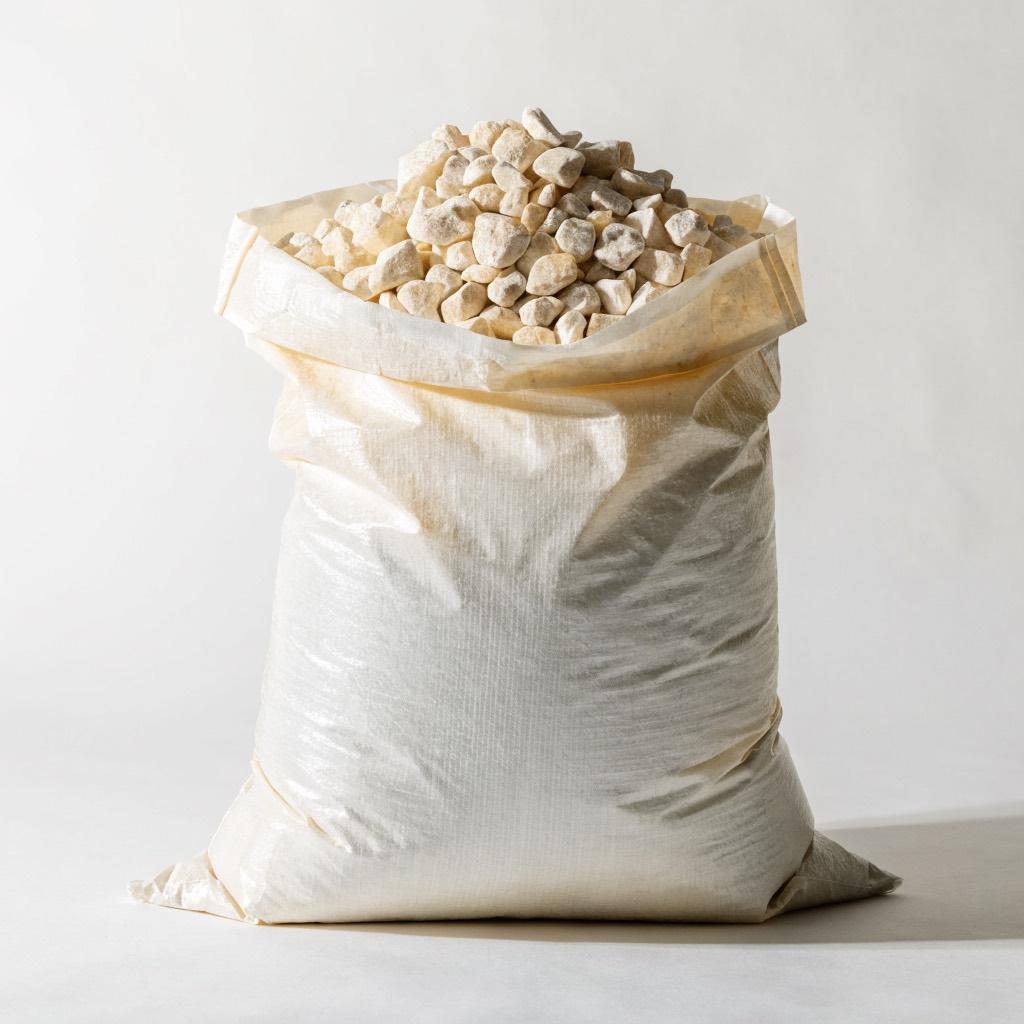
The gravel is not only there to make the pot look finished. A 2cm layer cuts evaporation, keeps the root zone cooler in summer and stops the surface crusting. For rosette plants it does one more job: it keeps the base of the leaves off wet soil, which is where agave and echeveria start to rot.
A 10kg bag of our decorative gravel top-dress (AED 45) covers about 0.5 square metres at 2cm deep. In practice that is roughly four 40cm pots or ten pots of about 24cm.
- Pull the gravel back a finger's width from the base of each plant so the stem can dry between waterings.
- Do not use beach sand or building sand as a top-dress. Beach sand carries salt, and fine sand washes down into the mix and clogs it.
- Expect a white crust on the gravel after a few months of tap water. Rinse it or turn it over; if the crust keeps coming back quickly, the pot needs a proper flush.
Watering with Dubai tap water
Desert plants in pots want a soak, then a dry spell. Water until it runs out of the drainage hole, then leave the pot alone until the mix is dry all the way down. A wooden skewer pushed to the bottom of the pot is the honest test: if it comes out damp or with soil stuck to it, wait.
The soak matters because of the water. Dubai tap water is desalinated and chlorinated, and every watering leaves a little dissolved salt behind. Small sips concentrate it near the roots; a full soak that runs out of the bottom carries it away. In winter, water in the morning so the surface dries by evening, and empty any saucer within the hour. The schedule for the rest of the garden is in how often to water garden plants from October to March. For the succulents themselves, the cool season usually works out like this:
- October and March: roughly every one to two weeks for pots in full sun, because days can still pass 35°C.
- December to February: every three to four weeks for agave, yucca and euphorbia in large pots, and every two to three weeks for small succulents in shallow bowls.
- After winter rain: skip at least the next watering. An exposed pot can stay wet for days after a heavy downpour, so check with the skewer before you water again.
What to change when summer returns
The scheme is built to hold through summer, but it needs a few changes in April and May. Move the small succulents into bright shade with morning sun only, because unshaded July sun scorches most nursery-grown echeveria. Agave, yucca and euphorbia can stay in full sun all year.
Shorten the watering interval as the heat builds. In a pot in full sun, agave typically needs water every 10 to 14 days in summer and euphorbia every 7 to 10, still only when the mix is dry. From July to September the coast is humid and nights stay warm, so pots dry more slowly than the heat suggests; that is when overwatered succulents rot. Raise pots off hot tile on feet, and leave repotting and dividing until October, when the next cool season starts and the whole cycle begins again.
Pets, children and the sharp parts
Desert plants are tough because they defend themselves, and several of these are not for a home with a dog that chews or a toddler at eye level.
- Euphorbia: the white latex is caustic and causes chemical burns and eye injury. Wear gloves and eye protection if you cut it, and keep it back from paths.
- Yucca: the ASPCA lists yucca as toxic to cats and dogs, and the leaf tips are sharp enough to injure an eye. Put it where nobody brushes past.
- Desert rose: the ASPCA lists it as toxic to cats and dogs. Handling and sap are covered in our desert rose guide.
- Agave attenuata: the ASPCA does not list it. Its sap can irritate skin, so wear gloves when you trim old leaves and treat it as a plant to look at, not chew.
- Succulent six-pack: echeveria and haworthia are non-toxic to cats and dogs per the ASPCA, but the pack is mixed at dispatch and can include crassula (jade), which the ASPCA lists as toxic. If you have a cat, check the varieties with us on WhatsApp (+971 50 136 8558) before ordering.
A little more clarity
Common questions.
What gravel should I use to top-dress succulent pots in the UAE?
Washed, pale gravel with no fine dust, laid about 2cm deep. Avoid beach sand, which carries salt, and fine building sand, which washes into the mix and holds water around the roots. A 10kg bag covers around 0.5 square metres, which is about four 40cm pots.
Can agave, yucca and succulents share one large planter?
Yes. They all want the same soak-and-dry watering and gritty mix, so a wide planter of 60cm or more works as a single scheme. Put the yucca in the centre, the agave towards the sides where its offsets have room to spread, and the small succulents at the front edge. Keep the euphorbia in its own pot if the planter sits beside a path, because of its caustic sap.
Should succulent pots on a Dubai balcony stand in saucers?
Yes, where your building does not allow water to run onto the balcony below, but empty the saucer within an hour of watering. A saucer that holds water keeps the bottom of the pot wet, which rots succulent roots, and still water can breed mosquitoes in about a week.
Does a blue agave die after it flowers?
The rosette that flowers does. Agave attenuata flowers once, after several years, on a long arching spike, and that rosette then dies back. It normally leaves offsets around its base that carry the plant on, so cut the old rosette out once it has faded and let the offsets fill the pot.
Can the Desert Chic Set go on an apartment balcony?
Yes, if the balcony gets direct sun for most of the day; south and west-facing balconies suit it best. On a north-facing or deeply shaded balcony the agave and euphorbia stretch and lose their shape. The set does not include pots, so plan two or three wide pots of 30cm or more, and note that the desert rose and euphorbia are not pet-safe.